REVIEW · ISTANBUL
Private Yacht Cruise on Bosphorus
Book on Viator →Operated by Golden City Tours · Bookable on Viator
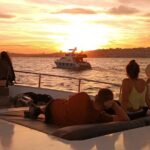
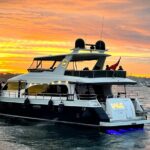
A two-hour yacht ride can change how you see Istanbul. You glide past the Bosphorus landmarks most people only recognize from photos, with time to relax, snack, and take it all in from the water.
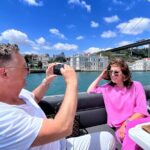
What I like most is the combo of comfort and information. You get mint lemonade plus tea or coffee, and you also have Wi‑Fi onboard so you can share the views without vanishing into airplane-mode silence.
The only real catch is physical: this isn’t recommended if you get sea sickness or vertigo, since you’ll be on open water for the full cruise.
In This Review
- Quick takes before you go
- Price and what you actually get for $366.52
- The onboard comfort details that matter in Istanbul
- The Bosphorus route: what you see from the water (and why it’s special)
- Dolmabahçe Palace: the European-style palace you spot first
- Çırağan Palace and its marble comeback into luxury
- Ortaköy and Bebek: neighborhoods with a different rhythm from the boat
- Bridges: the view of Europe–Asia crossings you can’t get on foot
- Fortresses and Ottoman defenses: Rumeli Hisari and Anadolu Hisari
- Beylerbeyi Palace and Kucuk Su: summer palaces with a garden pause
- The Golden Horn detour: Galata Bridge, Galata Tower, and Galataport views
- Guide time and the little service touches that earn repeat bookings
- Who this cruise suits best (and who should rethink it)
- Should you book the Private Yacht Cruise on the Bosphorus?
Quick takes before you go
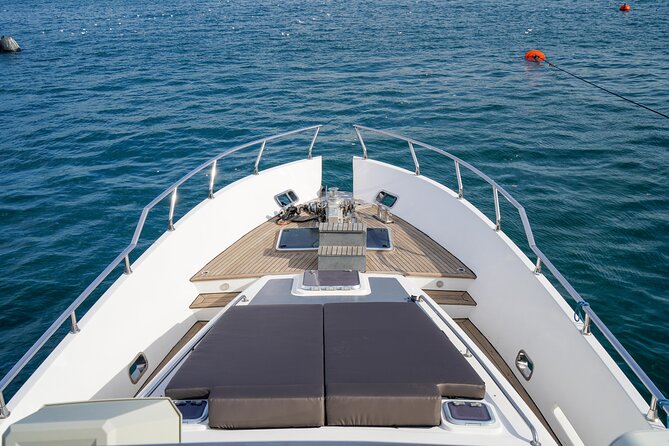
- Private group vibe (up to 12): you won’t be packed elbow-to-elbow, and the guide can keep things smooth.
- Mint lemonade and classic Turkish sweets onboard: fresh fruit, cookies, and baklava come with tea/coffee.
- Wi‑Fi on the boat: useful for maps, messages, and posting while the scenery is still in front of you.
- Big-name sights without sprinting: palaces, fortresses, and bridges are mainly best enjoyed from the water.
- Restroom onboard: a small thing that makes a big difference on a 2-hour outing.
- Guide-led storytelling: you’ll get context for what you’re seeing (not just random sightseeing).
Price and what you actually get for $366.52
This is priced at $366.52 per group (up to 12). That changes the math fast: if you’re traveling with family or a small group, it can feel like a bargain compared with buying separate boat tickets, especially for a private outing.
For solo travelers, the price may feel steep if you’re only chasing views. But if you care about comfort—drinks, snacks, a real guide, and Wi‑Fi—and you want to see a lot of the Bosphorus in one clean block of time, this is easier to justify.
If you’re choosing between this and doing it on public ferries, here’s the practical tradeoff: ferries are cheaper, but you don’t get the same controlled experience, onboard amenities, and commentary that help you understand what you’re looking at.
The onboard comfort details that matter in Istanbul
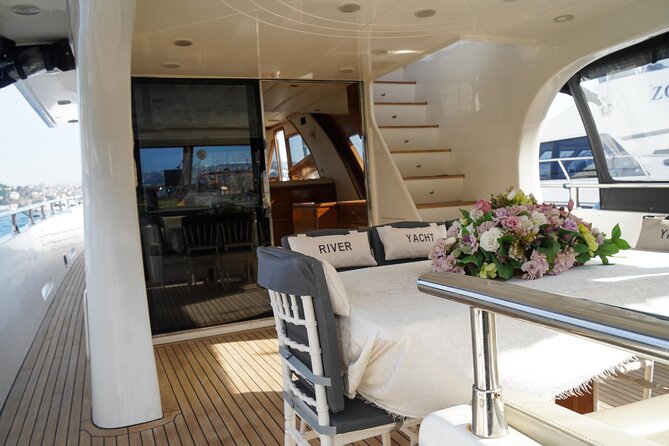
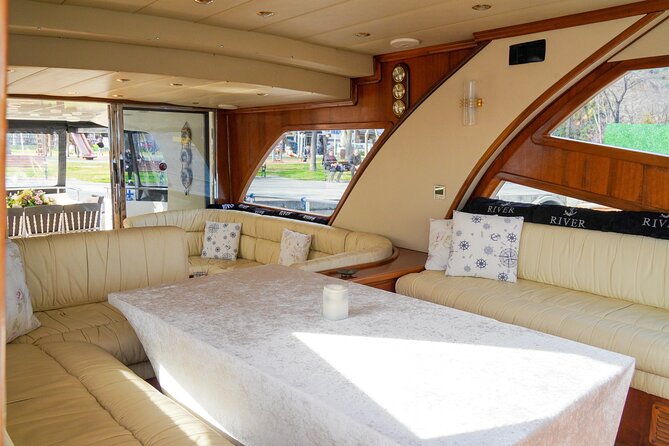
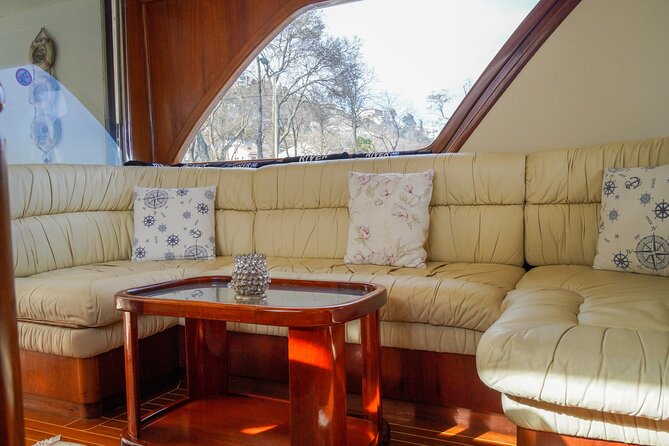
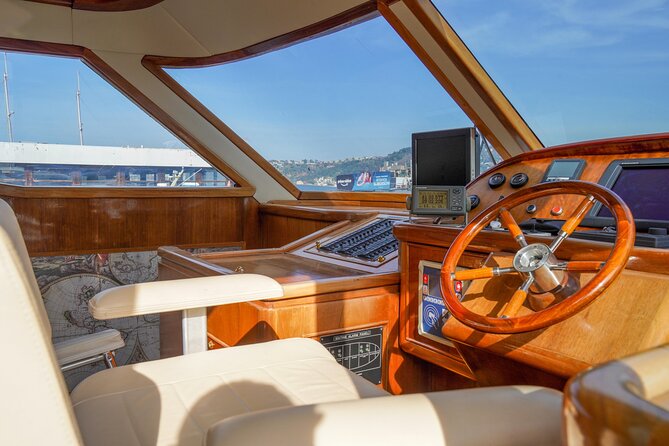
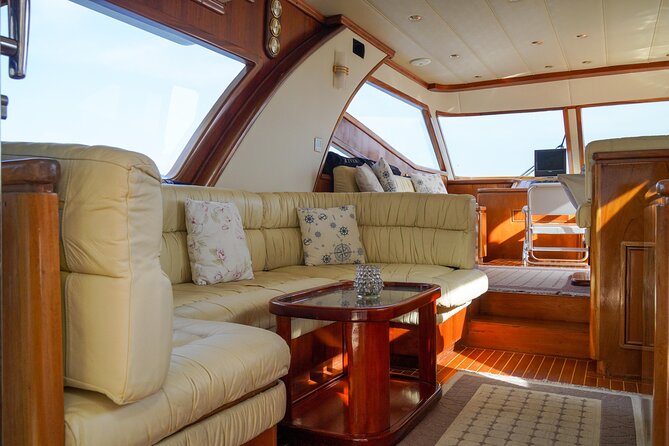
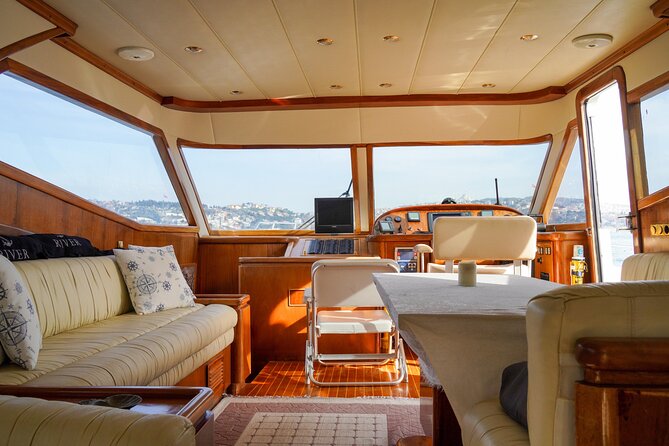
The boat ride runs about 2 hours and includes restroom access, which I always treat as a “quality of life” feature. You also get a professional local guide, plus a mobile ticket for check-in.
The best small win here is how they handle refreshments. You’ll have homemade lemonade with fresh mint, plus water, tea, and coffee, and you’ll get snacks such as a fresh seasonal fruit plate, cookies, and baklava served during the cruise.
And yes, the Wi‑Fi onboard is a real advantage. Istanbul photos look great, but the moment you start typing to friends or checking transit info, you’d rather have a connection than hunt for signal every few minutes.
The Bosphorus route: what you see from the water (and why it’s special)
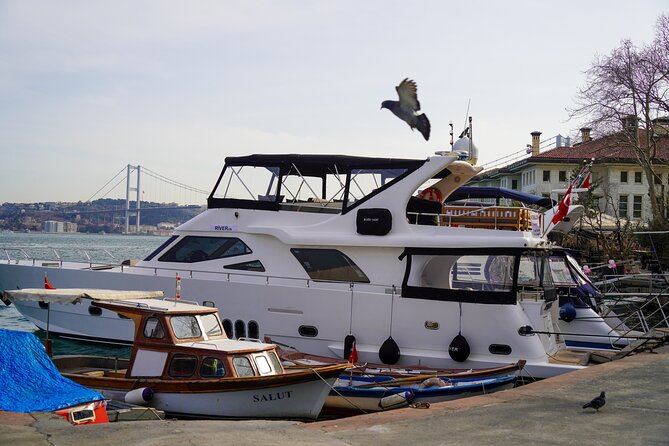
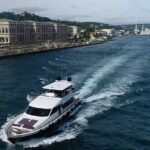
The Bosphorus is where Istanbul’s two continents feel closest. From the boat, you’re positioned to see the long shoreline lines, the mansions and palaces sitting above the water, and the bridges crossing the strait like giant moving diagrams.
You’ll pass major landmarks associated with the Ottoman era and the modern skyline. Expect views of Dolmabahçe, Çırağan, Beylerbeyi, plus Ottoman fortresses like Rumeli Hisari and Anadolu Hisari. You’ll also catch landmark bridges—the Bosphorus Bridge and the Fatih Sultan Mehmet Bridge—along with the broader spread of towers and neighborhoods.
A big practical point: this isn’t structured around long museum stops. It’s built for pacing. You get a controlled amount of time to look, listen, snack, and reset before the boat turns and the next stretch opens up.
Dolmabahçe Palace: the European-style palace you spot first
Dolmabahçe Palace is the kind of building that instantly says power and wealth. It blends multiple European architectural styles and was built between 1843 and 1856 by court architect Karabet Balyan during Sultan Abdulmecid’s reign.
From the water, the palace’s sheer scale is the takeaway. The palace has a symmetrical layout with 285 rooms and 43 halls, and it’s known for surviving with original decorations and furniture, plus its silk carpets and curtains.
You won’t be touring rooms on this cruise, but that’s okay. When you see the palace from the Bosphorus, the building’s position makes sense: it faces the water like a statement.
Çırağan Palace and its marble comeback into luxury
Çırağan Palace was commissioned by Sultan Abdulaziz and designed by architect Sarkis Balyan. It finished in 1871 and is made of marble, spread over about 80,000 square meters.
What helps you understand this place is the contrast in its story. The palace replaced an earlier wooden summer palace, and the nearby structures connected to that older complex didn’t survive the move to a grander marble build.
Today, Çırağan has a new life as a Kempinski luxury hotel. Again, you’re viewing it from the water rather than visiting interior spaces, but the cruise setting makes the location and scale easier to grasp than photos alone.
Ortaköy and Bebek: neighborhoods with a different rhythm from the boat
Ortaköy is a waterfront neighborhood on the European side, tied to the Beşiktaş area. It’s known for the Ortaköy Bazaar with cafes, bars, souvenir shops, and the kind of daily street life that makes Istanbul feel real, not staged.
One practical detail to file away: the bazaar movement picks up after about 10:00 am. Early hours are more quiet, so if you’re thinking of pairing this cruise with food or shopping afterward, plan for later morning or afternoon energy.
Then there’s Bebek, often compared to a high-end lifestyle zone of Istanbul. The neighborhood has historical buildings like Boğaziçi University and waterside mansions, plus restaurants with Bosphorus views that locals treat as part of the daily scene.
From the boat, Bebek’s shoreline mansions and Bebek’s “sea-facing” character become obvious. You’re not just seeing buildings—you’re seeing how the Bosphorus shaped where people live and how they socialize.
Bridges: the view of Europe–Asia crossings you can’t get on foot
The Bosphorus Bridge is a major highlight for a reason: it connects Europe and Asia across Istanbul. It’s also often described as the first bridge built on the Bosphorus and the only bridge in the world that connects Europe to Asia.
From the water, you can get a clear sense of why this crossing matters. The strait is narrow in places, but it still creates two distinct city rhythms. Bridges and ferries are the glue.
You’ll also see the Fatih Sultan Mehmet Bridge, the second Bosphorus bridge. It opened on July 3, 1988, began construction in 1986, and is among the largest steel suspension bridges globally (it’s listed as the 14th largest).
The cruise format helps: the skyline changes as you move, so the bridges aren’t static photos. They become part of a moving Istanbul panorama.
Fortresses and Ottoman defenses: Rumeli Hisari and Anadolu Hisari
If you want your Istanbul to feel strategic, not just pretty, the fortresses deliver. Rumeli Hisarı sits in Sariyer, constructed across from Anadolu Hisari at the narrowest Bosphorus point. Construction started in 1453 under Sultan Mehmet the Conqueror, and it was completed in an extremely short three-month window.
Originally meant to protect against naval attacks, it later supported maritime inspection after the conquest. Today, it serves as an open-air theater and museum, which tells you something important: the fortress space now plays host to culture instead of cannons.
On the Asian side, Anadolu Hisarı (Beykoz) was built in 1395 by Beyazid I. It includes a citadel and outer walls. After Istanbul’s conquest, it lost much of its strategic importance and became a military hospital, later turning into an open-air museum where you can visit the outer areas, while the road passes just through the site.
Cruise viewing is ideal here because the fortresses sit on water-facing edges. From ground level, you can miss the geometry of the defense positions. From the boat, the shape of the Bosphorus and the “why” behind their locations become easier to imagine.
Beylerbeyi Palace and Kucuk Su: summer palaces with a garden pause
Beylerbeyi Palace sits right under the Bosphorus Bridge, a reminder that Ottoman power wasn’t just court life—it was also leisure on the water. Built in the 1860s and designed by Sarkis Balyan, the architecture blends Renaissance, Baroque, and Eastern and Western influences.
The main building is two stories with a high basement, built on a land area of about 2,500 square meters. It includes 6 halls and 24 rooms, plus a hamam (Turkish bath) and a bathroom, split between Imperial Mabeyn and Valide Sultan’s apartment areas.
Don’t overlook the outside: Beylerbeyi is also about its lily pond and large garden. Even from the cruise viewpoint, the garden layout helps you “read” the complex as more than a shell of stone.
Then there’s Kucuksu Palace, a smaller Ottoman summer palace ordered by Sultan Abdulmecit and designed by architect Nikogos Balyan. It’s known for a strong Bosphorus view and was used by sultans for relaxation. In the Republican period, it opened as a museum due to the quality of furniture, paintings, carpets, and details.
From the boat, these palace-and-garden spaces are the perfect kind of contrast. You’re not always looking at only defense or monuments. Sometimes the view is about taste, comfort, and downtime.
The Golden Horn detour: Galata Bridge, Galata Tower, and Galataport views
Even though the headline is Bosphorus, the cruise experience you’re choosing includes sights around the Golden Horn area too. This matters because it gives your outing variety: you’re moving between eras, with Ottoman and Genoese structures beside modern waterfront development.
The Galata Bridge story starts in 1845, with multiple versions over time. It was damaged by fire in 1992, after which a new bridge was built. The older bridge was moved to Halic. The bridge area matters for daily life: restaurants, cafes, hookah lounges under the span, plus trams and pedestrians above.
Then comes Galata Tower, built by the Genoese in 1348. It was 66.90 meters tall and the tallest building in the city at the time. In Ottoman times it served multiple roles, including a fire observatory and jail.
A standout historical moment tied to the tower is in 1632, when Hezarfen Ahmet Çelebi reportedly glided from the top across the Bosphorus to Üsküdar using self-constructed wings.
Today, Galata Tower is open to public with a restaurant and cafe on the upper floor, and the tour includes you seeing it as part of the skyline picture.
Finally, Galataport Istanbul is the modern waterfront scene at Karaköy. It mixes a cruise port, shopping, restaurants, and cultural venues, shaped by restored historical buildings and a newly opened coastline that turned the area into a social hub.
If you love Istanbul because it mixes “old stone” and “new city,” this part of the cruise helps you get that in one smooth ride.
Guide time and the little service touches that earn repeat bookings
A professional local guide is included, and the feedback points to guides who explain what you’re seeing in plain terms and keep the pace comfortable. Names that show up with strong service feedback include Betül, Erol, Erik, Nur, Erbem, and Edmun.
The best outcome you’re aiming for is not just facts. You want context that makes the palaces, fortresses, and bridges feel like a single story instead of scattered landmarks.
Service also shows up in the small ways. Your cruise includes complementary drinks and snacks, and at least one comfort detail is mentioned in the feedback: blankets were provided for those who felt cooler on the water. If you tend to get chilled easily, pack a light layer anyway.
Who this cruise suits best (and who should rethink it)
This is a strong match if you:
- Want a 2-hour way to see multiple Bosphorus landmarks without walking for hours
- Travel with a small group (up to 12), where private value increases
- Care about comfort items like snacks, restroom access, and onboard drinks
- Like the idea of staying connected with Wi‑Fi while you tour
It’s not ideal if you:
- Get sea sickness or have vertigo, since the boat ride stays on the water for the full duration
Also, this is less about museum entry and more about views and commentary. If your perfect day is timed tickets inside historic rooms, you might pair this with a separate land-based palace visit later.
Should you book the Private Yacht Cruise on the Bosphorus?
I’d book this if you want an Istanbul highlight that feels polished and easy. The value is strongest when you split the group cost and when you’ll actually use the extras: mint lemonade, tea/coffee, fruit and pastries, restroom access, Wi‑Fi, and a local guide explaining what you’re seeing.
I’d skip it if you’re prone to motion sickness or you want hands-on museum time rather than skyline and shoreline views. And if you’re traveling solo with a tight budget, you might compare it with public ferries plus one paid guided walking tour onshore.
Otherwise, this is a clean, scenic way to connect the dots between Ottoman palaces, fortified history, and modern Istanbul bridges—all from one relaxing 2-hour yacht cruise.
You Might Also Enjoy

More Tour Reviews in Istanbul
- Bosphorus Yacht Cruise with Stopover on the Asian Side – (Morning or Afternoon)
★ 5.0 · 1,657 reviews