REVIEW · ISTANBUL
Luxurious Bosphorus Small Group Sunset Yacht Cruise with Snacks
Book on Viator →Operated by Mega Lüfer Yachts | Bosphorus Dinner Cruise İstanbul | Bosphorus Daytime and Sunset Cruise · Bookable on Viator
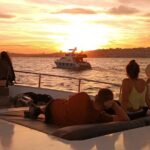
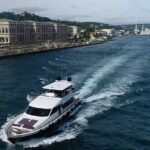
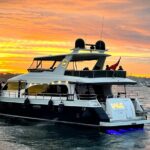
The Bosphorus looks different from the water. I love the sunset views that turn palaces and mosques into glowing silhouettes, and I love the value: for a low price you still get snacks, coffee/tea later, and plenty of photo time. One thing to plan for: the boat motion can be real, and the best sunset angles can be blocked by hills as you head back toward Beşiktaş.
This cruise is built for an easy afternoon-to-evening flow. It’s a max of 50 travelers, and the crew sets up onboard WiFi and an audio guide (which helps you connect names to what you’re seeing). One practical tip from how it runs: if you’re sensitive to wind and movement, you’ll likely prefer the lower level, because most people head down once the air gets gusty.
In This Review
- Key Highlights You’ll Actually Feel
- Why This 2.5-Hour Bosphorus Cruise Works for First-Time Istanbul
- Getting on Board at Mega Lüfer Yachts (and Finding the Entrance)
- What the Crew Does: WiFi, Audio Guide, and a Busy First Few Minutes
- Dolmabahçe Mosque and Palace: The Imperial Start You Can Photograph Immediately
- Çırağan Palace and Feriye Palace: Marble Elegance and Waterfront Light
- Ortaköy Mosque and the Bridge-Framed Istanbul Postcard
- Suada (Galatasaray Island) and Kuruçeşme: Luxury Views and a Working Shoreline
- Arnavutköy and the Fish-Restaurant Side of the Bosphorus
- Rumeli Hisarı and Anadolu Hisarı: Fortresses at the Narrowest Point
- Two Bosphorus Bridge Views: Modern Engineering Meets Ottoman Stone
- Küçüksu Pavilion, Kuleli Military High School, and Beylerbeyi Palace
- Maiden’s Tower and How the Night Light Can Change Everything
- Price, Snacks, Service, and What You Should Expect
- Should You Book This Bosphorus Sunset Cruise?
- FAQ
- How long is the cruise?
- How much does it cost?
- Is the tour offered in English?
- Where do we meet?
- Are snacks included?
- How big is the group?
- What happens if the weather is bad?
Key Highlights You’ll Actually Feel
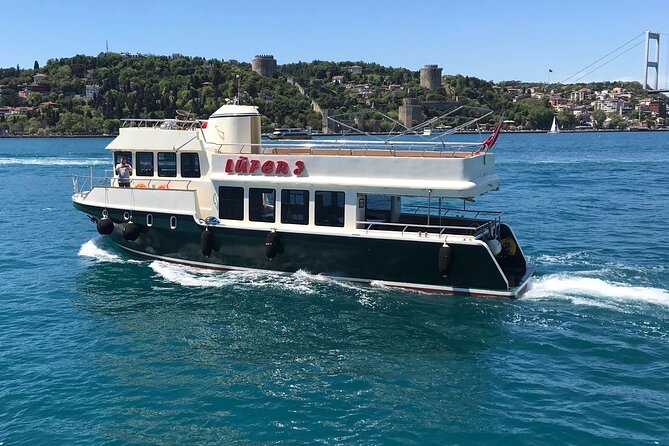
- A classic route with major waterfront landmarks from Dolmabahçe Mosque and Palace to the Maiden’s Tower
- Snacks plus coffee/tea, with unlimited refills so you’re not rationing what you brought
- WiFi and an audio guide set up on the spot, so you can follow along without guesswork
- Two-level boat comfort logic: downstairs is calmer when it gets windy
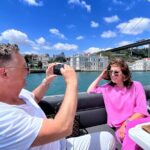
- Photo timing is built around viewpoints, including the bridge frames and palace façades on the water
- Sunset may be less dramatic than expected if hills block the view as you return
Why This 2.5-Hour Bosphorus Cruise Works for First-Time Istanbul
If you only have a day (or a half day) in Istanbul, the Bosphorus is the quickest way to grasp the city’s layout. You see the European shore, then the Asian shore, without the stress of taxis or figuring out what’s worth walking to.
What makes this cruise especially useful is that it mixes big-name landmarks with real working-city scenery. You’ll pass imperial-era symbols like Dolmabahçe and Çırağan, then you’ll get modern Istanbul cues at bridge lines, waterfront neighborhoods, and the steady flow of boats.
The biggest “okay, now I get it” moment is how often the water makes the skyline feel like a slideshow. Marble façades, domes, and minarets read differently from the strait. At sunset, the reflections help the details pop, and at night the illuminated bridge and waterfront buildings turn into a clear backdrop for photos.
Getting on Board at Mega Lüfer Yachts (and Finding the Entrance)
Meet at Mega Lüfer Yachts | Bosphorus Dinner Cruise İstanbul | Sunset & Daytime Tours, on Meclis-i Mebusan Cd. No:34, Beyoğlu (34427). This is one of those places where it pays to arrive a bit early, because the exact access point can be easy to miss.
A real-life caution: your ticket voucher may not spell out the entrance clearly. One practical workaround is to ask staff at the dock area where the boat is boarding, even if you think you’ve found it. The good news is the staff can be flexible. If people are late, the boat may wait and can even return to collect them.
Once you’re on the boat, choose your spot with the weather in mind. It’s a two-level setup. On breezy afternoons, most people end up downstairs because wind and sea motion feel stronger on top. If you’re planning to take photos, downstairs also tends to feel steadier.
What the Crew Does: WiFi, Audio Guide, and a Busy First Few Minutes
This cruise includes an audio guide experience tied to onboard WiFi. The staff can help log your phone into the system, which makes it much easier to follow along with what you’re seeing—especially when the view changes fast.
There’s a small timing tradeoff. The start can feel a bit hectic: you might be juggling boarding, WiFi setup, and snack/drink ordering all around the same time. Still, the payoff is that you don’t have to hold your phone up constantly trying to match a landmark to a map.
You’ll also get snacks, then coffee/tea later. Reviews also point to unlimited refills, which matters on a cruise. It’s one less thing to worry about while you’re trying to enjoy the light shifting over the water. The bathrooms are kept clean too, which you’ll appreciate once you’re in “sit back and watch” mode.
Dolmabahçe Mosque and Palace: The Imperial Start You Can Photograph Immediately
The cruise starts by threading the Beşiktaş waterfront near Dolmabahçe. This is the entry point for one of Istanbul’s most visually dramatic eras.
Dolmabahçe Mosque (completed in 1853) is a mix of Baroque and Empire style with Ottoman elegance. From the sea, those tall windows and golden leaf details get framed by the waterline. The dome and slender minarets reflect on the Bosphorus, and that reflection can look extra sharp near sunset.
A short note that helps you understand what you’re seeing: this is not just a museum stop. It’s an active place of worship, so if you’re taking photos, be mindful and keep it respectful.
Just down the line you see Dolmabahçe Palace (commissioned in 1856). It’s the last great visual statement of Ottoman grandeur, and from water it looks like the façade is floating above the strait. The palace is known for its scale—285 rooms—and features like the 4.5-ton Bohemian crystal chandelier, the grand crystal staircase, gilded ceilings, and Hereke carpets.
One practical upside: because you’re on a moving boat, you get quick “arrive and see” moments. Another upside: the palace appears soon after you get underway, so you’re not left waiting for the good stuff.
If you’re expecting the darkest night cityscape lights by the time you reach everything, keep your timing expectations realistic. One review noted that it wasn’t quite dark enough for full effect on one sunset run, especially with hills blocking angles on the return.
Çırağan Palace and Feriye Palace: Marble Elegance and Waterfront Light
After Dolmabahçe, the cruise shifts toward other Beşiktaş and Ortaköy-area landmarks.
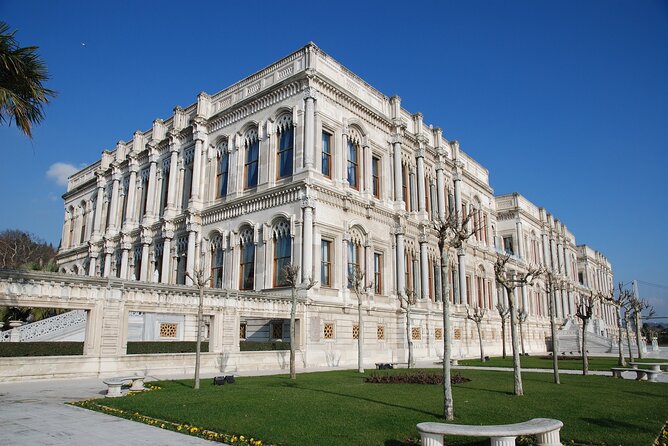
Çırağan Palace (completed in 1871) is legendary for how it looks along the water: built entirely of marble and decorated with Ottoman motifs. Even though a major fire damaged much of the interior in 1910, the outer shell remains striking. From the sea, the broad façade and waterfront terraces can feel like a stage set.
Then comes Feriye Palace, built in 1871 as an annex tied to the Dolmabahçe and Çırağan era. It’s a Neoclassical-and-Ottoman blend, with arched windows and ornate detail. Today it’s used for upscale restaurants and event spaces, so you may see activity along the waterfront even as you pass.
A useful way to enjoy these stops: think of them like “different chapters of the same imperial style.” They’re all linked to the late Ottoman period, but their waterfront presence feels different—Çırağan leans grand and dramatic, while Feriye reads more elegant and light-filled.
Ortaköy Mosque and the Bridge-Framed Istanbul Postcard
Ortaköy is where the cruise really turns into a postcard factory.
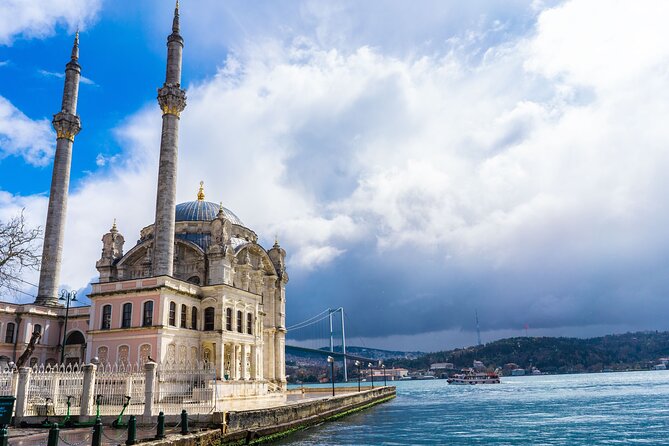
Ortaköy Mosque (the Büyük Mecidiye Mosque, completed in 1856) sits right along the shore with the Bosphorus Bridge behind it. The building blends Baroque elegance with Ottoman design: grand dome, carved stonework, and tall windows that flood the interior with natural light.
From the water, the real magic is the framing. The bridge lines create depth, and the mosque becomes centered like it’s staged for photos. If you love sunrise and sunset aesthetics, this is one of Istanbul’s most photogenic views.
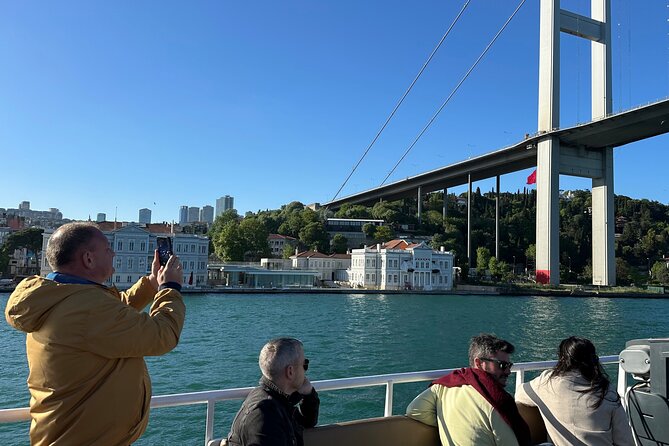
Then you move into the big modern landmark moment: the Bosphorus Bridge itself. It opened in 1973 as the first link between Europe and Asia, and it stretches about 1,560 meters between Ortaköy (European side) and Beylerbeyi (Asian side). From the cruise, you’ll see it as a suspension bridge silhouette, and at night it’s illuminated with changing colors.
Important practical note: pedestrian access is not allowed, so the bridge is more about the view from the water than any on-foot exploration.
Suada (Galatasaray Island) and Kuruçeşme: Luxury Views and a Working Shoreline
Between the big monuments, the cruise also shows you the everyday rhythm of Bosphorus life.
Galatasaray Island, also known as Suada, sits off the Kuruçeşme shore. It has roots in the Ottoman period and later became a sports and social club site, plus high-end entertainment. The key thing for you as a cruise passenger: the island gives you 360-degree views from its waterfront perspective, including the skyline and the Bosphorus Bridge. At the moment, it’s under redevelopment, so what you see from the water may include construction or partial changes.
Right after that, you pass Kuruçeşme, a waterfront neighborhood known for cafés, stylish restaurants, and a night-out vibe. Historically it had a mix of communities and Ottoman mansions, and the shoreline still carries that layered feel. From the sea, colorful buildings and green hills become the backdrop for glittering evening lights.
This section matters because it keeps the cruise grounded in real Istanbul—not only palaces and monuments. It’s the city as people experience it, just viewed from a moving vantage point.
Arnavutköy and the Fish-Restaurant Side of the Bosphorus
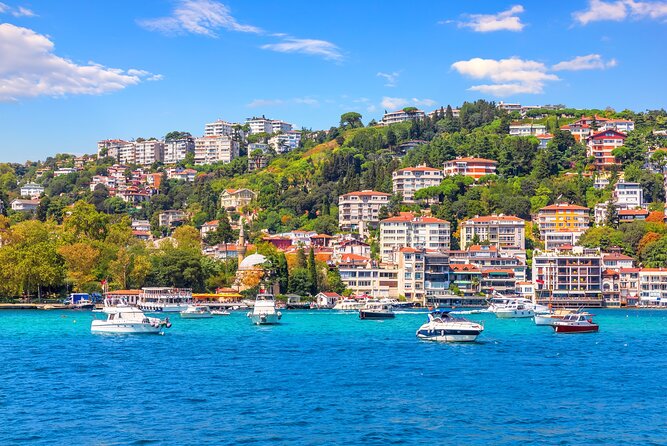
Arnavutköy is famous for its colorful Ottoman-era wooden houses and narrow streets, plus the lively waterfront restaurant scene. It has a historical mix of Turkish, Greek, Armenian, and Jewish communities, and you can feel that variety in the architecture and local food culture.
From the boat, you’ll get a classic Bosphorus photo angle: pastel-colored mansions backed by green hills. If you care about food, Arnavutköy is known for fresh fish restaurants, and the waterfront cafés are the kind of places you can imagine stepping into after the cruise.
Even if you don’t dock here, this stop-by-view is worth it. It helps you understand that Istanbul’s waterfront isn’t only historic—it’s also a living dining and community space.
Rumeli Hisarı and Anadolu Hisarı: Fortresses at the Narrowest Point
Now you get the militarized side of Istanbul’s geography.
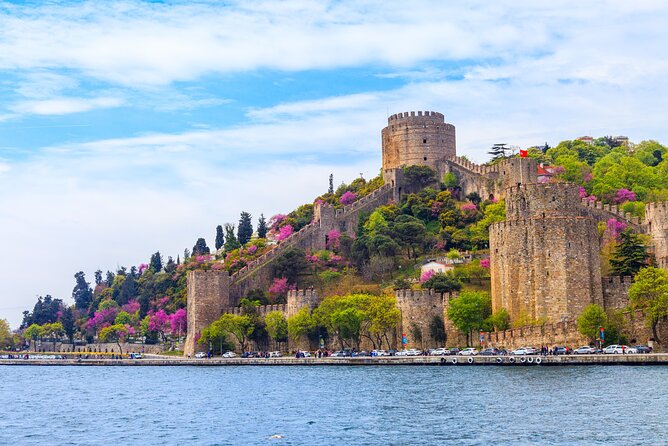
Rumeli Fortress (Rumeli Hisarı) is built at the European side on a hillside at the narrowest stretch. It was constructed in just four months in 1452 by Sultan Mehmed II. Its massive stone walls and three bastions were meant to control naval traffic and cut off aid to the Byzantine city.
From the water, it creates one of the most dramatic historical silhouettes on the Bosphorus. This is a strong section for anyone who wants the strait to feel strategic, not just scenic.
On the Asian side, Anadolu Hisarı (built in 1395 by Bayezid I) served as a strategic stronghold before the conquest. It’s more compact, with a central keep and surrounding walls. From the cruise, it can feel quieter and more charming, with the shoreline setting and the nearby Göksu River contrast.
These fortresses pair well with the bridge views because they highlight the same theme: the Bosphorus has always been a crossroads people fought over—and later, people built around.
Two Bosphorus Bridge Views: Modern Engineering Meets Ottoman Stone
The cruise doesn’t stop at one bridge moment.
You’ll see the Fatih Sultan Mehmet Bridge (the Second Bosphorus Bridge), completed in 1988 and named after the Ottoman sultan who conquered Constantinople in 1453. It spans about 1,510 meters between the shores near Rumeli Hisarı and Anadolu Hisarı.
From the water, you’ll get a sleek steel frame that sets off the historic fortresses. The contrast is the point: ancient stone defense versus modern crossing infrastructure.
If you’re a photo person, treat these as your “geometry shots.” The bridge cables and lines make great framing for the surrounding hills and towers.
Küçüksu Pavilion, Kuleli Military High School, and Beylerbeyi Palace
As you work further along the Asian shore, the scenery shifts from forts and neighborhoods to Ottoman leisure and elite residences.
Küçüksu Pavilion (completed in 1857) is an imperial hunting lodge and summer retreat commissioned by Sultan Abdülmecid. It mixes Baroque elegance with Ottoman charm, with an ornate two-story façade, fountains, decorated interiors, chandeliers, and fine carpets. From the sea, the white building against lush gardens can look especially romantic.
Next is Kuleli Military High School, built along the water’s edge under Sultan Abdülmecid in 1845. Its striking white neoclassical façade with twin towers stretches along the shoreline, giving it a palace-like appearance. Historically, it served various roles, including as a military hospital during World War I, and today it’s no longer operating as a high school—but it stays an iconic waterfront landmark.
Then comes Beylerbeyi Palace, built between 1861 and 1865 as a summer residence and guesthouse for foreign dignitaries. It mixes Ottoman tradition with Baroque and Neoclassical elements, with marble exteriors and lavishly decorated interiors, plus Hereke carpets. Empress Eugénie of France is listed among the notable visitors.
From the water, Beylerbeyi Palace reads as elegant and structured, especially when you see it with gardens. It’s one of the clearest “this is where power lived” views on the Bosphorus.
Maiden’s Tower and How the Night Light Can Change Everything
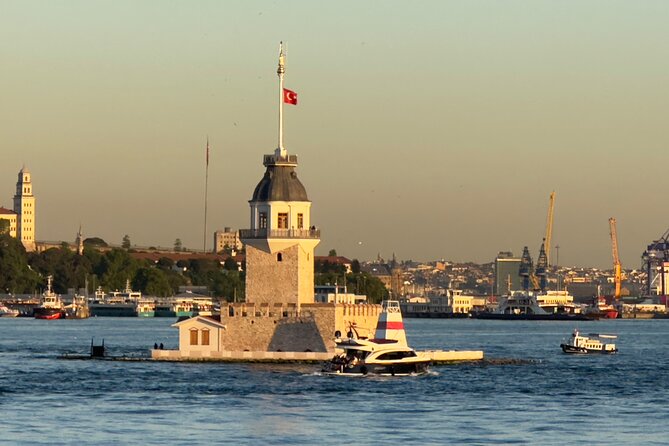
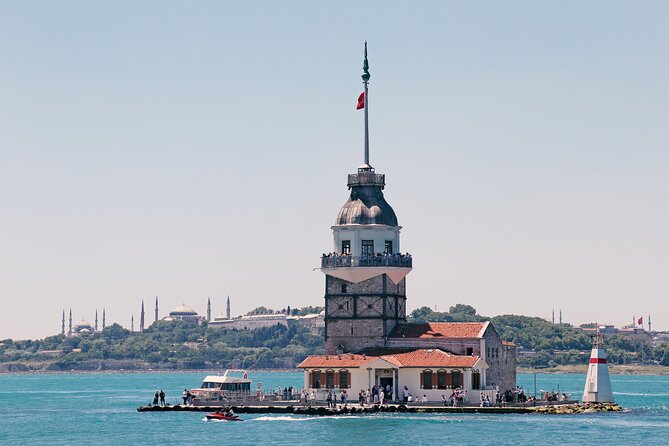
Near the end of the cruise line, you’ll see Maiden’s Tower (Kız Kulesi), rising from a tiny islet at the southern entrance of the Bosphorus. The location has ancient roots, while the current structure was rebuilt in the 18th century. It served as a lighthouse, quarantine station, and watchtower.
The tower is also famous for legend—centered on a princess protected from a prophecy and tied to a tragic love story. Even if you don’t care about stories, it’s hard not to watch it when the water makes it look extra isolated and dramatic.
Today it operates as a museum and café-restaurant, with panoramic views of both sides of Istanbul. From the boat, it’s one of those “stop pretending you’re not impressed” moments, especially if you time the light right.
Price, Snacks, Service, and What You Should Expect
At about $20 per person for roughly 2 hours 30 minutes, this cruise hits a sweet spot: it’s long enough to feel like an outing, short enough for a day plan, and it includes more than just “sit and stare.”
Here’s what adds value beyond the view:
- Snacks are included, and coffee/tea comes later.
- Refills are unlimited, which is practical when you’re watching light change for a long stretch.
- The staff can help set up WiFi and an audio guide on your phone.
- Bathrooms are reported as very clean.
- Service feels attentive, including handling late arrivals and keeping the trip moving.
One review singled out a staff member named Cengiz as fantastic and professional—good service really makes a cruise feel smooth, especially during the start when everything is happening at once.
The main drawback to keep in mind is physical comfort. The Bosphorus isn’t a bathtub. If you’re prone to motion sickness, you should plan accordingly and stay where the boat feels steadier.
Should You Book This Bosphorus Sunset Cruise?
You should book this if you want a focused way to see a lot of Istanbul landmarks in one sitting: imperial mosques and palaces, waterfront neighborhoods, and bridge views from a unique angle. The mix of included snacks/coffee/tea and the WiFi audio guide means you’re not just consuming visuals—you’re learning names and context without extra effort.
You might skip (or adjust expectations) if you’re chasing the perfect dark-night cityscape glow. If hills block sightlines on your particular run, the sunset moment can feel less dramatic. Also, if you’re very sensitive to wind or sea motion, plan to choose the lower level.
If your goal is a satisfying, good-value Bosphorus outing with plenty of photo chances and an organized onboard experience, this cruise is a smart pick.
FAQ
How long is the cruise?
It runs for about 2 hours 30 minutes.
How much does it cost?
The price is $20 per person.
Is the tour offered in English?
Yes, it is offered in English.
Where do we meet?
You’ll meet at Mega Lüfer Yachts | Bosphorus Dinner Cruise İstanbul | Sunset & Daytime Tours, on Meclis-i Mebusan Cd. No:34, 34427 Beyoğlu, Istanbul.
Are snacks included?
Yes. Snacks are provided, and coffee/tea is offered later, with unlimited refills mentioned.
How big is the group?
The maximum group size is 50 travelers.
What happens if the weather is bad?
This experience requires good weather. If it’s canceled due to poor weather, you’ll be offered a different date or a full refund. Confirmation is received at booking.
You Might Also Enjoy
More Tour Reviews in Istanbul
- Bosphorus Yacht Cruise with Stopover on the Asian Side – (Morning or Afternoon)
★ 5.0 · 1,657 reviews