REVIEW · SANTA CRUZ
LA PINTA DARWIN’S LEGACY (Fri-Thurs)
Book on Viator →Operated by Metropolitan Touring · Bookable on Viator
Galápagos starts fast, even before you settle in. This 7-day cruise on Yacht La Pinta mixes classic islands and wildlife with nonstop water time, guided walks, and dinghy rides. Two things I really like: you get certified naturalists onboard, and the days are built to keep you seeing wildlife without feeling rushed.
I also appreciate the ship setup. With a cap around 48 passengers, you still get that calm, crew-on-your-side feel—like when guides explain what you’re looking at and then help you actually get to it.
One thing to think about: the schedule is active. You’ll be hopping on and off boats, doing hikes, and snorkeling with changing sea conditions, so the cruise asks for moderate physical fitness and a sense of flexibility.
In This Review
- Key highlights you’ll notice right away
- First day on Baltra: a fast orientation with La Pinta’s rhythm
- Day 2 on Isabela and Fernandina: lava cliffs, turtles, and penguins
- Urbina Bay to Tagus Cove: tectonic uplift, crater walks, and whale chances
- Rabida and Cerro Dragon: red beaches, finches, and brackish-water bird life
- Charles Darwin Research Station and Santa Cruz highlands
- Floreana: Post Office Barrel, cratered channels, and turtle-nesting beaches
- What you get for your money on La Pinta (and what you still pay)
- Snorkeling and getting around: fun, but expect effort
- Packing for Galápagos quarantine rules (don’t wing it)
- The human side: naturalists and crew that make the day click
- Should you book La Pinta Darwin’s Legacy?
- FAQ
- Where does this cruise start and what time does it run?
- How long is the La Pinta Darwin’s Legacy itinerary?
- What’s included with the cruise besides the ship?
- Do I need to pay the Galápagos National Park entrance fee?
- Is there Wi-Fi onboard?
- What fitness level do I need?
- Is snorkeling gear provided?
- Can I get special food options?
- What happens if weather affects the plan?
- Is alcohol included?
Key highlights you’ll notice right away
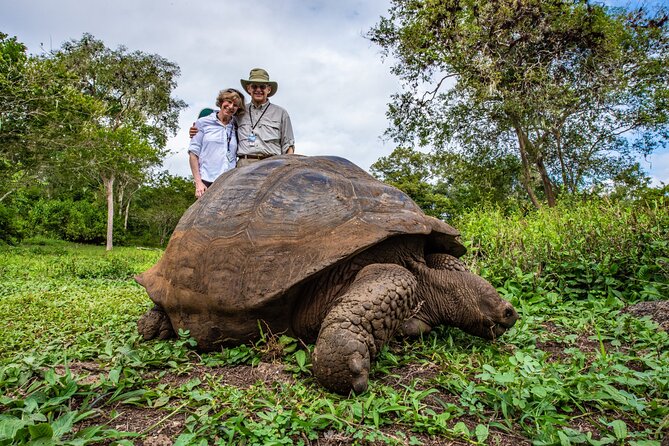
- Small-ship feel on La Pinta: capped near 48 people, so activities don’t feel like cattle-herding.
- Dinghies, kayaks, paddleboards, glass-bottom boats: you can move between shore, cliffs, and reefs in multiple ways.
- Daily naturalist interpretive time: wildlife sightings come with names and context.
- Snorkeling gear is handled for you: wetsuits and snorkeling equipment are included.
- Classic Darwin-era sites: from the Charles Darwin Research Station to crater walks and saltwater coves.
- Doctor onboard 24/7: a comfort factor when the day is busy and you’re getting in and out of boats.
First day on Baltra: a fast orientation with La Pinta’s rhythm
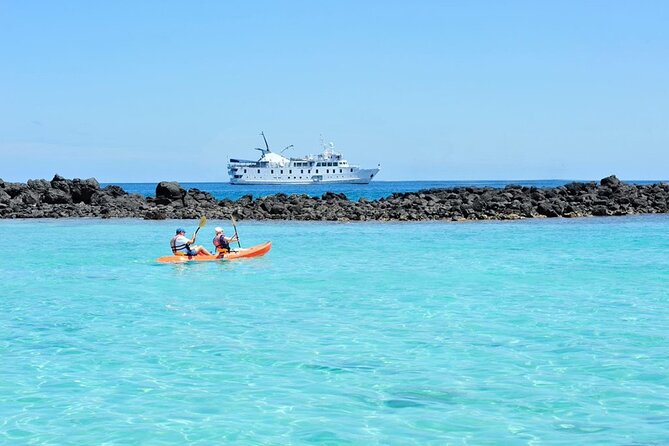
You start at the Galápagos Ecological Airport on Baltra, with a departure time listed as 10:00 am. After your morning flight connection, the transfer is quick: you’re soon at the dock, boarding La Pinta for a briefing.
Then it’s right into ship life. You’ll do an emergency boat drill (simple, practical, and meant to keep everyone safe), and after you get your cabin squared away, lunch follows. That order matters. It helps if you’re thinking, How do I get oriented without wasting the first half of the day?
Afterward, there’s an afternoon stop on Baltra’s side via Metropolitan Touring. You’ll walk along the coast and inner areas on a relatively flat route, watching bird colonies, sea lions, and land iguanas. There’s also a chance to explore by dinghy, which is a nice preview of the way this cruise connects land and water.
Practical tip: if you’re sensitive to motion or choppy water, ask the crew early about timing and which activities are easiest to transition into on day one.
Day 2 on Isabela and Fernandina: lava cliffs, turtles, and penguins
This itinerary keeps the momentum going. Day two focuses on Isabela Island first, at Punta Vicente Roca. There’s no disembarking platform, so the exploration happens by dinghies right along the coast. Expect naturalist-led explanations of the lava flows and tuff stone layers—the geology is part of the wildlife story here.
Depending on conditions, you may snorkel along the cliffs, and green sea turtles are a strong possibility. Even when you’re not in the water, this is one of those places where wildlife feels close and natural, not staged.
In the afternoon you shift to Punta Espinoza on Fernandina, described as among the top islands to visit in the archipelago. Here the theme is a stark mix: barren terrain with abundant life. Highlights commonly include hawks, penguins, and flightless cormorants, plus broad volcanic views.
A quick reality check: weather can change what you do from day to day. So I’d treat snorkeling as a priority, but still plan to enjoy the wildlife viewing even if water conditions tighten up.
Urbina Bay to Tagus Cove: tectonic uplift, crater walks, and whale chances
Day three starts at Urbina Bay on the western side of Isabela. This visitor site comes from tectonic uplift of the ocean floor, which is why you get plenty of corals and shells in the mix, along with colorful land iguanas. Giant tortoises are possible, and that matters because it’s not just a photo moment—you’re seeing the ecosystems connect.
While you sail across the Bolívar Channel, whale sightings are a high-probability target. This is one of those parts of the cruise where you’ll want to be out watching as often as you can, because the best time to see whales is simply when you’re paying attention.
Then you shift to Tagus Cove on the northwest side of Isabela. The area has a historical role as a pit stop for pirates and whalers, but today it’s about biology and terrain. After disembarking, you do an uphill walk to the rear of Darwin Crater, which is made of salt water. That crater walk isn’t just scenery—it’s a chance to understand how the islands’ shape created the habitats you’re looking at.
After the hike, you can choose between snorkeling or kayaking along dramatic coastal features. If you want one day that feels like a mix of adventure and science, this is it.
Rabida and Cerro Dragon: red beaches, finches, and brackish-water bird life
Day four brings Rabida Island, known for its red-colored beach. If you like birding, this is a great stop. You can spot marine iguanas, mockingbirds, yellow warblers, and several types associated with Darwin’s finches. Beach snorkeling is often a highlight here, with non-snorkelers able to use a glass-bottom boat to explore underwater life without getting wet.
Then it moves to Cerro Dragon (Dragon Hill) on Santa Cruz’s north shore. The walk is more “steady” than extreme: you circle a brackish-water lagoon that’s often full of lagoon birds. Inland, the trail opens up to views of the bay and western islands. Land iguanas can show up again here, so if you’re building a mental checklist, this day helps you fill in multiple boxes fast.
Tip for this day: bring a bit of patience for footing. Some paths can be uneven, and the island experience is best when you slow down enough to look at what’s around you—not just where your next step goes.
Charles Darwin Research Station and Santa Cruz highlands
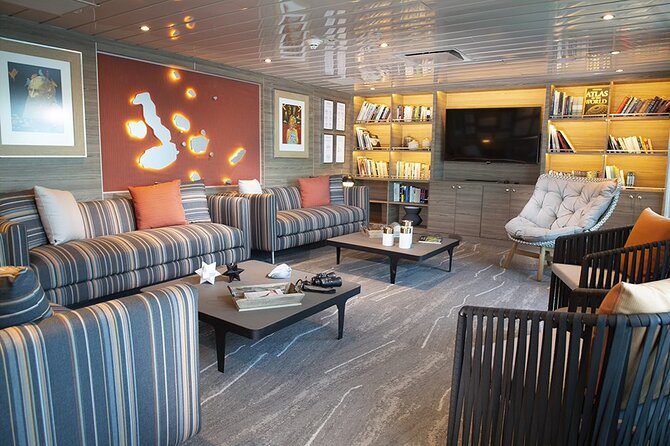
Day five is where the cruise turns from “see wildlife” to “understand how science protects wildlife.”
First: the Charles Darwin Research Station. You’ll visit giant tortoise pens and an area described as a giant prickly-pear cactus forest. The station functions as a center for scientific research and conservation and also serves as park administration offices. For me, this is the grounding piece that makes the rest of the trip feel more meaningful. Wildlife isn’t random here. It’s managed, monitored, and protected.
Then after lunch, you head into the highlands of Santa Cruz by private bus. This part is about the evolutionary footprint—especially finches that inspired Darwin and the presence of endemic scalesia trees. Giant tortoises roam freely in the wild here, so keep your eyes open while you’re walking and when you’re stopped for views.
If you love nature photography, this is a strong day for “detail shots” too—plants, textures, and the way the island changes with elevation.
Floreana: Post Office Barrel, cratered channels, and turtle-nesting beaches
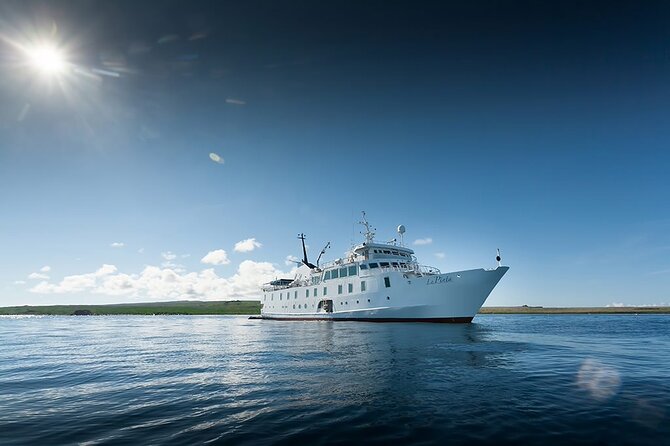
Day six starts on Floreana with Post Office Bay. The historic “Post Office Barrel” is a signature stop: it’s been used as a post office in the Galápagos for over two centuries. It’s a weirdly charming concept in the middle of volcanic wilderness, and it gives you a real sense of how people tried to connect across distance before modern communications made it easy.
There are also dinghy rides through maze-like channels along Floreana’s north shore. You’ll get rewarding viewpoints from places like La Lobería and Baroness Viewpoint. If you want water time, this is one of the best days for it: kayaking and swimming are mentioned here.
In the afternoon, you switch to Champion Islet & Cormorant Point. At Champion Islet, snorkeling or a glass-bottom boat ride along a coast near an extinct cone is on the menu. Then it’s Cormorant Point: an olivine-crystal beach, a brackish-water lagoon, and bird highlights like American flamingos. A short walk leads you to a white-sand beach where sea turtles may come ashore to nest.
This is one of those days where the wildlife feels close and calm at the same time. Just keep distance, watch for crew instructions, and let the animals be the main event.
What you get for your money on La Pinta (and what you still pay)
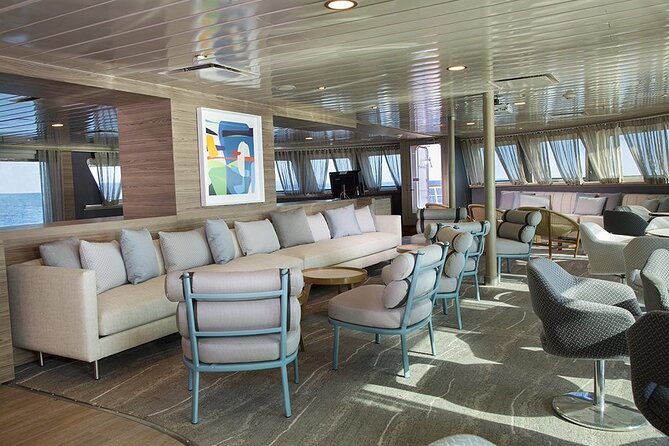
This cruise is priced at $7,946 per person for a 7-day trip. That’s serious money, so I judge value by what’s included and how much it replaces separate costs.
Here’s what you’re getting as part of the package:
- Certified naturalist guides for island sightseeing
- A doctor onboard 24/7
- Water gear: wetsuits and snorkeling equipment
- Activity tools: glass-bottom boat, kayaks, paddleboards, and pangas (dinghies)
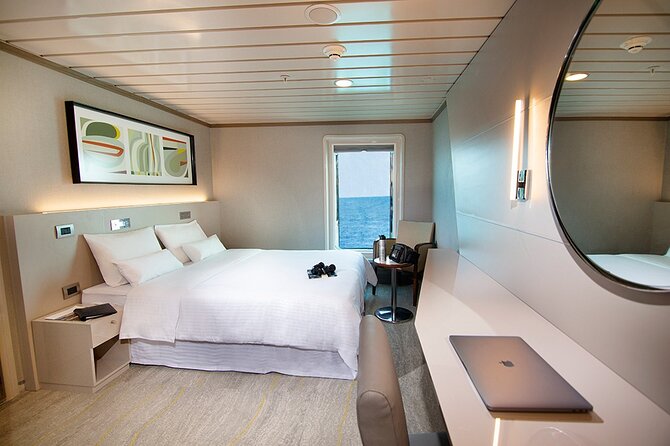
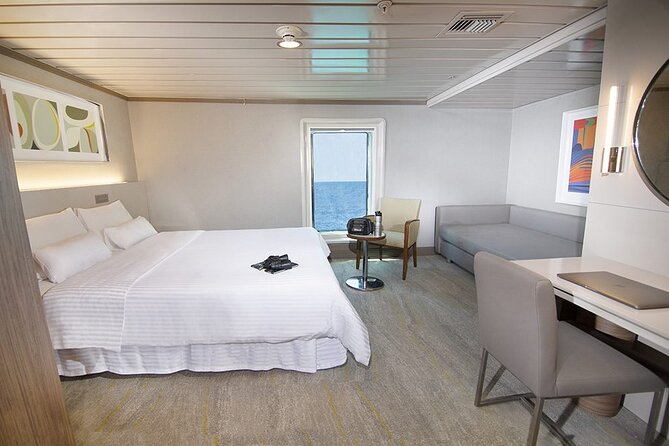
- Cabin safety and ship facilities, including a safe deposit box
- Meals: 6 breakfasts, 6 lunches, 6 dinners
- Wi-Fi, but note it’s intermittent and low-bandwidth due to the remote location
Not included items to plan for:
- Galápagos National Park entrance fees
- The Ingala Transit Control Card
- Airport transport to/from Galápagos and airport taxes
- Tips/gratuities and gift pack
- Alcohol and soft drinks
- Fuel surcharge (it’s listed as something your destination expert will contact you about)
Also worth knowing: the itinerary can shift due to weather, logistics, and park regulations. That doesn’t feel like a “bait and switch” here—it’s part of how Galápagos operates.
Snorkeling and getting around: fun, but expect effort
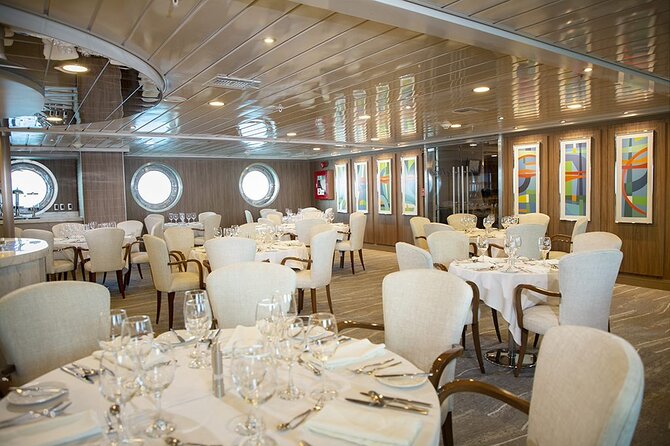
A lot of this cruise is about water access. You’ll do snorkeling from boats and shore, plus dinghy transfers and occasional hikes.
What matters is how you handle changing conditions. The route includes snorkel time at multiple sites, but sea state can change your comfort. The company provides wetsuits and snorkeling gear, and the crew helps with transitions, which makes a difference when waves are moving the boat.
From my perspective, the main challenge isn’t toughness—it’s rhythm:
- You’ll go from ship to panga to shore
- Then you’ll walk a bit, snorkel if conditions allow, and repeat
- On some days you might feel tired simply because you’re using your body and your brain all day
The upside: you’re not stuck at one viewing spot. You’re seeing marine life from multiple angles—surface, underwater, and shoreline.
Tip: bring the clothing that works for quick changes. One review specifically praised packing sturdy waterproof sandals, UV long-sleeve shirts, and hats, and that’s exactly the sort of practical gear that helps when you’re constantly moving.
Packing for Galápagos quarantine rules (don’t wing it)
Galápagos has strict quarantine rules to prevent foreign species from arriving. You can’t just toss fresh items into your luggage and hope.
Baggage basics listed:
- 23 kg (50.6 lb) checked
- 8 kg (17 lb) hand luggage
- 1 personal item (camera bag, laptop bag, etc.)
And the quarantine restrictions are specific. Items you shouldn’t transfer to the Galápagos include things like:
- fresh vegetables and fruits
- animal products and derivatives
- dairy products
- grass and its disseminative parts
- fresh flowers and medicinal plants
- soil and sand
- and a long list of other biological materials
If you want fewer headaches, pack light with sealed, non-perishable items and skip anything “garden-fresh” or homemade food.
Also, label everything and pack liquids and fragile items carefully. It’s easy to lose time if your bag isn’t set up for inspection.
The human side: naturalists and crew that make the day click
This is where the cruise becomes more than a checklist of stops.
The ship’s system is built around briefings and clear activity planning. Evening presentations and onboard talks show up often enough that you can prepare what to wear and what to bring for the next day. That helps you feel “ready” instead of scrambling.
In terms of people, multiple guides and crew names show up in experience stories, including naturalists such as Cathy, Indira, David, and Desi, and also guide names like Dries and Indi. On the crew side, names like Jefferson and Gabby show up as standout staff, and one person specifically credited Roberto for humor and good energy.
On the planning side, destination experts named in experience stories include Carolina Escobar, Melissa Altamirano, Maria Emilia, and Anddy Males. These are the people who help align domestic flight schedules, airport timing, and the steps you need before you reach the ship.
If you’re going for stress-free, that human planning layer matters. Galápagos isn’t complicated once you’re there, but getting there is its own game.
Should you book La Pinta Darwin’s Legacy?
Book this cruise if you want:
- a high-activity itinerary with multiple water-based options
- naturalist-led interpretation at top visitor sites
- a ship setup with a cap near 48 passengers
- the comfort of wetsuits/snorkel gear included and a doctor onboard 24/7
Skip it or choose a lighter version if:
- you know you struggle with repeated getting in and out of boats and uneven, sometimes slippery ground
- you don’t enjoy snorkeling as an “on and off” activity depending on conditions
- you want lots of downtime with minimal movement
If Galápagos is a once-in-a-lifetime trip for you, I’d say this one is built well: you see the big Darwin-era stops, you get water access daily, and the pacing keeps you in nature instead of waiting around.
FAQ
Where does this cruise start and what time does it run?
It starts at the Galápagos Ecological Airport on Baltra (Seymour, Ecuador), with a start time listed as 10:00 am.
How long is the La Pinta Darwin’s Legacy itinerary?
The duration is listed as 7 days (approximately).
What’s included with the cruise besides the ship?
Included features include island sightseeing with certified naturalist guides, a doctor onboard 24/7, glass-bottom boat/kayaks/paddleboards/pangas for coastal exploration, wetsuits and snorkeling equipment, and meals (6 breakfasts, 6 lunches, 6 dinners).
Do I need to pay the Galápagos National Park entrance fee?
Yes. Galápagos National Park entrance is listed as not included.
Is there Wi-Fi onboard?
Wi-Fi is included, but it’s intermittent and low-bandwidth due to the remote location.
What fitness level do I need?
The experience says travelers should have moderate physical fitness. That’s because the program includes hiking and water activities with boarding and disembarking.
Is snorkeling gear provided?
Yes. Wetsuits and snorkeling equipment are included.
Can I get special food options?
A vegetarian option is available if you advise the company at booking. Specific dietary requirements can also be shared at booking.
What happens if weather affects the plan?
This experience requires good weather. If it’s canceled due to poor weather, you’ll be offered a different date or a full refund.
Is alcohol included?
Soft and alcoholic beverages are not included and are available at an extra cost for people over 18.