REVIEW · ISTANBUL
Dolmabahçe Palace and Sunset Tour on Luxury Yacht
Book on Viator →Operated by Tour Book Turkey · Bookable on Viator
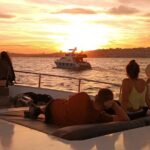
Sunset on the Bosphorus hits fast. This tour pairs a guided Dolmabahçe Palace visit with a luxury yacht cruise through Istanbul’s waterfront icons, with a guide explaining what you’re seeing as the light changes. I really like the storytelling focus—how the sites connect to Ottoman rulers, power, and daily life—and I also like the onboard food setup with baklava, cookies, Turkish tea, lemonade, fruit plates, and water. One catch to plan for: Dolmabahçe Palace entry isn’t included, so you’ll need to budget that extra fee.
I’m also a fan of how the pacing works: you get serious museum time up front (about 3 hours), then you shift into an easy, scenic cruise where you can actually relax and look around. The group stays small (max 20), and the tour runs in English, which makes the historical details feel clear instead of dumped on you.
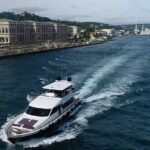
The yacht portion also means you’re learning Bosphorus geography in motion—bridges, palaces, fortresses, and skyline landmarks—without doing nonstop standing and walking. If you’re sensitive to motion at sea or you get nervous with heights, this type of cruise may not be your best match.
In This Review
- Key highlights at a glance
- Luxury Yacht Sunset on the Bosphorus: what the 5 hours feel like
- Dolmabahçe Palace with a guide: Ottoman rooms you’ll actually understand
- Why Dolmabahçe is more than a big building
- Cıragan Palace, Ortaköy, and the Bosphorus Bridge area: passing Istanbul’s showpieces
- Cıragan Palace (Çırağan)
- Ortaköy district and Ortaköy Bazaar
- The Bosphorus Bridge at Ortaköy / Beylerbeyi
- Bebek
- Fortresses and narrow-water history: Rumeli Hisarı and Anadolu Hisarı
- Rumeli Hisarı (Rumeli Fortress)
- Anadolu Hisarı (Anatolian Fortress)
- Ottoman summer palaces from the water: Küçüksu and Beylerbeyi
- Küçüksu Palace
- Beylerbeyi Palace
- Maiden’s Tower and skyline sunset: legend plus real history
- Food, comfort, and what’s not on the menu
- Price and value: is $78.10 a fair deal?
- Who should book this Dolmabahçe and Bosphorus sunset cruise
- Should you book this tour or look for another?
- FAQ
- Is Dolmabahçe Palace admission included in the price?
- What’s included on the yacht besides the sightseeing?
- Does the tour include alcohol?
- How long is the tour and is it in English?
- What’s the group size limit?
- Is this tour okay if I get sea-sick or feel dizzy?
Key highlights at a glance
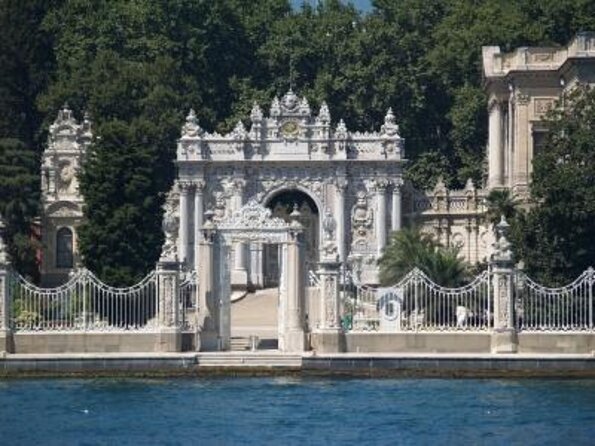
- Dolmabahçe Palace with a guide so you don’t miss the important rooms and the leader’s connection to the site
- Luxury sunset cruise that links landmarks by story, not just by photos
- Onboard treats and drinks: cookies, baklava, Turkish tea, lemonade, fruit plates, water, plus restroom on board
- Bosphorus viewpoints from the water near Ortaköy, Bebek, and the bridge area
- Fortresses and imperial summer palaces you’ll pass by with context (Rumeli Hisarı, Anadolu Hisarı, Küçüksu, Beylerbeyi)
- Maiden’s Tower at golden hour with legends and historic uses explained as you get the skyline moment
Luxury Yacht Sunset on the Bosphorus: what the 5 hours feel like
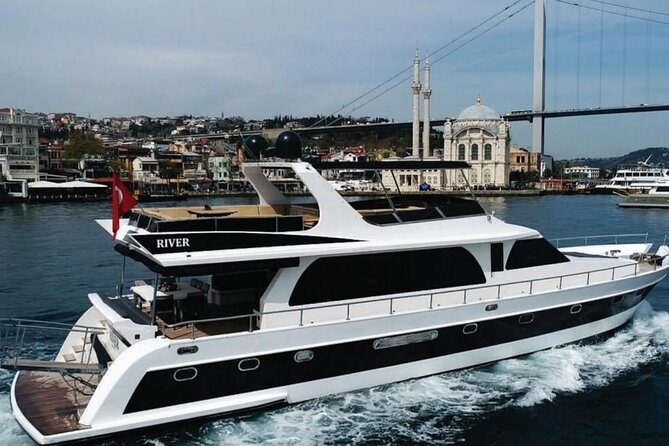
This is a classic Istanbul combo day: museum depth in the morning/early part, then a sunset cruise that lets the city open up from the water. The total time is about 5 hours, and the schedule is built around getting you out for the evening light—when the Bosphorus landmarks look their most dramatic and the skyline photos actually work.
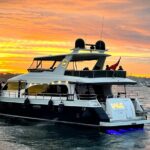
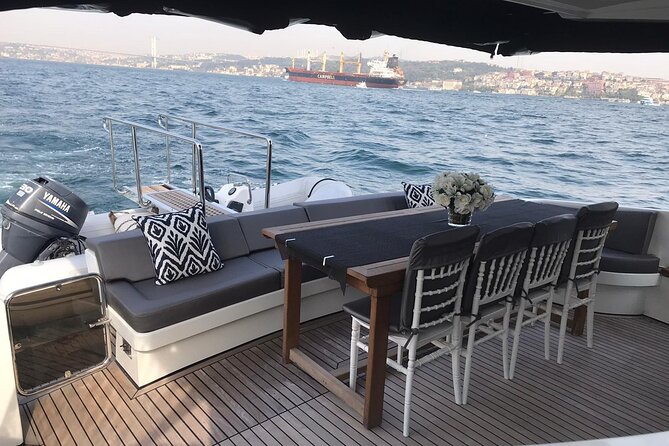
The “luxury yacht” framing matters because it’s not just a boat ride. You’re on a smaller, more comfortable experience (up to 20 people), and you’re fed—cookies, baklava, Turkish tea, lemonade, fruit plates, and water—so you’re not juggling snacks while listening to the guide. There’s also a restroom on board, which sounds basic, but on a 5-hour outing it makes a real difference.
English is the working language, which helps a lot if you want the history explained instead of guessing. And because the cruise is focused on passing key sites along the Bosphorus, you get the “you can see that from the water” advantage without needing to hop ferries or keep changing transport.
Dolmabahçe Palace with a guide: Ottoman rooms you’ll actually understand
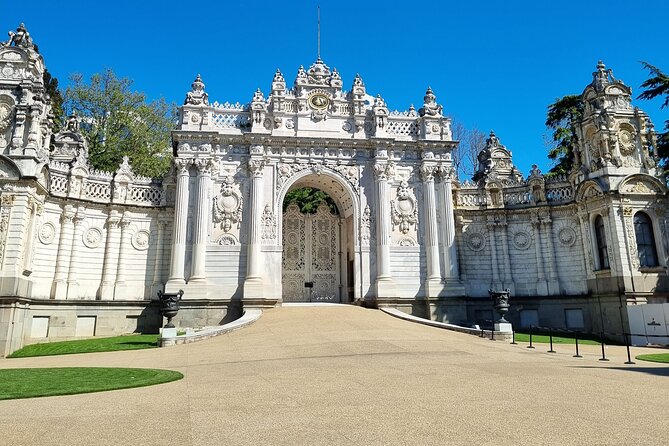
The palace stop is the heart of the day. You’ll spend about 3 hours at Dolmabahçe with a professional guide who explains how it functioned as the Ottoman Empire’s administrative center—and where your guide connects the site to the beloved leader’s passing.
What I like about booking Dolmabahçe with a guide is simple: this is not a palace you can wander through casually and automatically grasp. The guide points you toward the grand halls and opulent furnishings that make the place feel like power, not just decoration. You also get the gardens and the larger palace layout, which helps you understand why the building was meant to impress.
One practical note: the Dolmabahçe admission ticket is not included. That doesn’t ruin the value, but you should plan for it so the final cost matches what you expect. Once you budget that entry fee, the payoff is a guided museum visit paired with a full sunset cruise.
Why Dolmabahçe is more than a big building
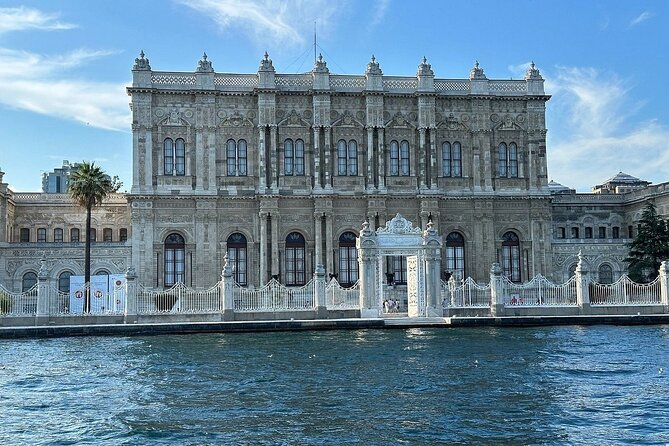
Dolmabahçe is memorable because it sits at the crossroads of empire and later history. Your guide will highlight that it served as the empire’s administrative center and that it’s now a museum—so you’re seeing how political life gets turned into public heritage.
You’ll also get the kind of context that changes how you look at details. Instead of treating ornate rooms as just decor, you start seeing them as statements of authority and identity. And because your visit is guided, you’re less likely to get stuck in the trap of only taking photos. You’ll come away with the sense of what the palace represented and why it was built the way it was.
Cıragan Palace, Ortaköy, and the Bosphorus Bridge area: passing Istanbul’s showpieces
After the palace time, you shift onto the water route where the guide connects the dots as you pass landmarks along the shoreline. Some sights are best understood as “you’re seeing the view from here,” and this route does that well.
Cıragan Palace (Çırağan)
Cıragan Palace was commissioned by Sultan Abdulaziz and designed by architect Sarkis Balyan. It sits on the site of a former wooden summer palace built by Selim III around 1800, and the construction replaced the older wooden structure and affected nearby areas. Construction finished in 1871, and the palace is described as marble, covering a large area (80,000 square meters).
It also carries heavy personal history: after Abdulaziz was deposed, he was imprisoned there for years with his family. After Murat V was deposed, he faced a similar imprisonment for 29 years with his family. Later, after the Second Constitutional Monarchy in 1908, it was used as the House of Parliament, though it suffered damage in a 1910 fire. Then the grounds were transferred to Besiktas Sports Club and used as Seref Stadium for a time. In the early 1990s, it was restored and reopened as a luxury hotel.
That’s a lot of time in one landmark, and the cruise format makes it easy to absorb. You’re not just seeing “a palace by the water.” You’re hearing the story of who lived there, what it was used for, and why the building feels dramatic even from a distance.
Ortaköy district and Ortaköy Bazaar
Ortaköy is a lively neighborhood on the European side of the Bosphorus, covering Ortaköy and Mecidiye. The area is described as a settlement on the slopes opening toward the coast, and the bazaar is active throughout the day with an “intellectual market,” souvenir shops, cafes, bars, and restaurants.
One small timing detail that’s worth knowing: the market feels less lively in the early hours, with the movement starting after 10:00 am. On this tour, you’re not relying on the bazaar for the main experience, but it explains the mood you might notice from the shoreline if you happen to glance toward the waterfront during the day.
The Bosphorus Bridge at Ortaköy / Beylerbeyi
As you cruise, the guide points out the Bosphorus Bridge’s feet: one side in Ortaköy (European) and the other in Beylerbeyi (Anatolian). You also learn the bigger picture: it’s one of the two suspension bridges on the Bosphorus, and together with the later Fatih Sultan Mehmet Bridge and ferries, it shapes how people cross the city.
This is one of those moments where the guide’s context improves what you see. Without it, it’s just a bridge in the skyline. With it, you understand the bridge’s role in Istanbul’s daily life and city planning.
Bebek
Bebek sits on the European shores and has Ottoman-era roots as a residential district. Today it’s known for historical buildings like Bogazici University and waterside mansions, plus beautiful Bosphorus views and restaurants that lean upscale.
Even when you’re only seeing it from the yacht, it’s a good “where are we on the Bosphorus?” anchor. You get the sense of how the shoreline shifts from neighborhoods into more formal waterfront areas.
Fortresses and narrow-water history: Rumeli Hisarı and Anadolu Hisarı

The Bosphorus is famous because it’s narrow in places—and Istanbul’s conquerors understood that. This cruise brings you past two fortresses that were built to watch and control these choke points.
Rumeli Hisarı (Rumeli Fortress)
Rumeli Hisarı is in Sariyer, directly across from Anadolu Hisarı. Construction began in 1453 on the order of Sultan Mehmet the Conqueror, placed at the narrowest point of the Bosphorus. The fortress was completed in an extremely short span of three months.
Before the conquest, it was used to protect against naval attacks. After the conquest of Istanbul, it became an inspection point for maritime traffic on the Bosphorus. That “protect, then monitor” shift is the kind of detail a cruise guide can make stick, and it adds meaning to the walls you see from the water.
Anadolu Hisarı (Anatolian Fortress)
Anadolu Hisarı is on the Asian side in Beykoz, again at a key narrow point of the Bosphorus. Built in 1395 by Beyazit I, it includes a citadel and exterior castle walls. After the conquest, its strategic importance declined, and the area was converted into a military hospital.
Over time, settlement grew around the castle. Today, restoration work (1991–1993) turned it into an open-air museum, but only the outer walls are visitable, and the road passes just through it—so access on the ground is limited.
From the yacht, you’re not managing museum logistics, but you get the historical framing. Seeing both fortresses across the strait gives you instant “this is why the Bosphorus mattered” clarity.
Ottoman summer palaces from the water: Küçüksu and Beylerbeyi
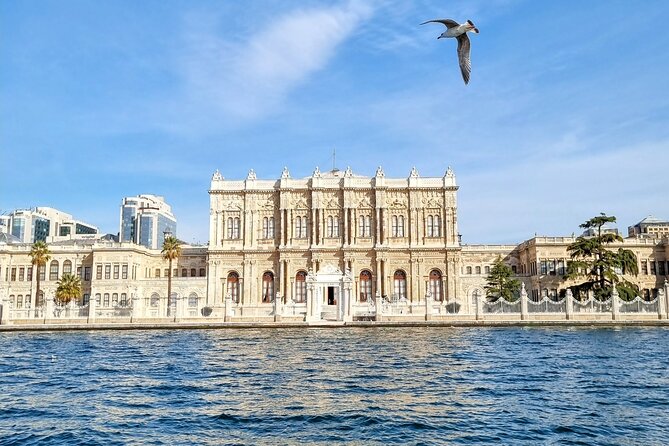
This part of the route is all about summer retreat architecture and imperial lifestyle—because Istanbul’s rulers weren’t just building power centers. They also built places to relax, host, and display taste.
Küçüksu Palace
Küçüksu is located on the Bosphorus coast road between Üsküdar and Beykoz. It’s a small Ottoman summer palace ordered by Sultan Abdulmecit and designed by architect Nikogos Balyan.
It’s described as having an excellent Bosphorus view, and it attracted sultans during the Ottoman period for relaxation. Furniture quality, paintings, and carpets are mentioned, along with attention to delicate details. During the Republican period it opened as a museum.
Even if you’re just passing by, this stop category helps you read the shoreline as a timeline of court life: fortresses for war-era control, then palaces for leisure and rule-by-display.
Beylerbeyi Palace
Beylerbeyi Palace (meaning Lord of Lords) sits on the shores of the Bosphorus, built in the 1860s. Today it lies right under the Bosphorus bridge, which makes it feel almost tucked beneath modern infrastructure.
Architect Sarkis Balyan is credited, and the palace combines Renaissance and Baroque elements with other styles from both East and West. The main building is two storeys on a high basement, with stone construction and about 2,500 square meters of land area for the palace.
Inside, the layout includes 6 halls, 24 rooms, plus a hamam and a bathroom across the two levels. The guide will typically point out how the south side functioned as Imperial Mabeyn and the north side as Valide Sultan’s Apartment, which helps you understand the palace as a working residence with distinct roles, not one uniform “pretty house.”
Maiden’s Tower and skyline sunset: legend plus real history
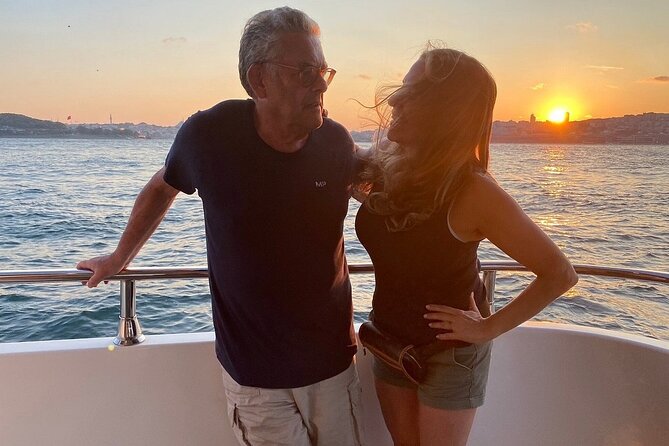
The final visual payoff is Kız Kulesi—Maiden’s Tower. It’s one of the most distinctive Bosphorus landmarks, built on a tiny island about 200 meters from the shore of Üsküdar. The legends are a big part of why it’s famous, and your guide explains the best-known version.
The legend goes like this: an oracle predicts a sultan’s daughter will die by snake bite on her 18th birthday. To prevent it, the tower is built in the middle of the Bosphorus, where she lives in secrecy and protection. On her 18th birthday, a basket of fruits is given to her—only she reaches inside and finds the snake, leading to her death in her father’s arms.
You’ll also get the historic layers. The tower is described as built by the Genoese in 1348. It’s nine stories and stands 66.90 meters tall, and at the time it was the tallest building in the city. In the Ottoman era it served multiple roles, including a fire observatory and a jail. In 1632, Hezarfen Ahmet Çelebi is mentioned as gliding from the top of Galata Tower across the Bosphorus to Üsküdar with self-constructed wings. A storm in 1875 destroyed the conic roof, and it wasn’t restored during the rest of the Ottoman era. Later, in the 1960s, the conical cap was restored and the wooden interior was replaced with concrete. Today, it’s open to the public, with a restaurant and cafe on the upper floor.
What you should expect on the cruise: the skyline view improves as light softens. This is your best chance for those “Istanbul is dramatic” photos without having to crane your neck on a crowded viewpoint.
Food, comfort, and what’s not on the menu
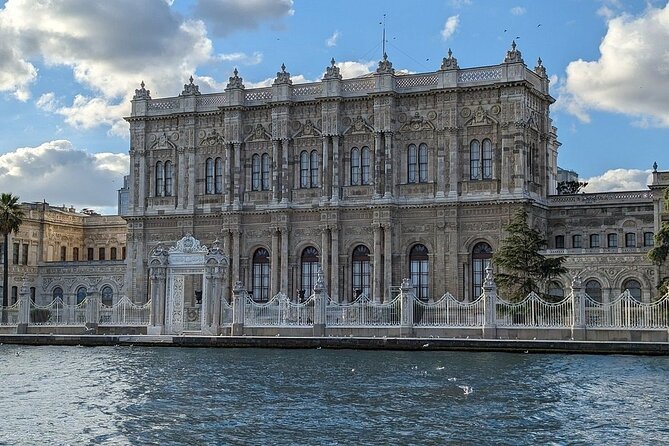
On board, you get snacks and drinks designed for a cruise pace: cookies, baklava, Turkish tea, lemonade, fruit plates, and water. There’s also a restroom on board, which is a big quality-of-life detail.
Alcoholic beverages are not included. If you want beer, wine, or anything stronger, you’ll need to arrange that separately (and the tour won’t supply it as part of the package). The rest of the comfort picture is straightforward: small group size, guided narration, and a route built around passing major sights instead of long, exhausting stops.
One more practical point: the experience isn’t recommended for people prone to sea-sickness or for those with vertigo. If either applies to you, take it seriously. A Bosphorus sunset can be gorgeous, but it’s still a moving boat.
Price and value: is $78.10 a fair deal?
At $78.10 per person for about 5 hours, you’re paying for three things together: a guided Dolmabahçe visit, a luxury yacht cruise with storytelling, and onboard refreshments. That combination is often where the value comes from—especially in a city where doing palace time and a Bosphorus cruise separately can add up quickly.
The one value-reducing detail is clear: Dolmabahçe Palace entry isn’t included. So you should treat the price as “guide + cruise + food + cruise experience,” and then add the palace ticket cost on top.
When I look at value here, the biggest win is not the boat alone. It’s the guided historical framing across multiple landmarks—palaces, fortresses, and skyline icons—linked into one trip while you’re actually out on the water. If your goal is to understand Istanbul in a single afternoon, this package is built for that.
Who should book this Dolmabahçe and Bosphorus sunset cruise
You’ll likely enjoy this most if you want:
- A guided museum experience at Dolmabahçe, not just a self-guided wander
- Bosphorus landmarks connected by stories, from Cıragan to Rumeli Hisarı to Kız Kulesi
- A relaxed pace compared with trying to cover everything by land and ferry in one day
- An English-led format with a small group (max 20)
I’d be careful if:
- You’re sensitive to boat motion (sea-sickness risk)
- You deal with vertigo or uncomfortable heights
Also, if you’re traveling with a specific interest in Ottoman-era rulers, prison history, and palace architecture, this route gives you plenty of “oh, that’s what that building was for” moments.
Should you book this tour or look for another?
Book it if you want one afternoon where you get Dolmabahçe’s palace context plus a sunset cruise that shows Bosphorus icons in the right light. The onboard food makes it feel complete, and the small group size keeps the guide conversation from getting lost.
Skip or swap if you only care about a self-paced Dolmabahçe museum visit, or if you’re very motion-sensitive. In that case, you might be happier with a land-based palace tour plus a separate, shorter Bosphorus option.
If you’re planning ahead, note that this tour tends to be reserved well in advance (on average, about 71 days), so waiting until the last minute can shrink your good time choices.
FAQ
Is Dolmabahçe Palace admission included in the price?
No. The Dolmabahçe Palace admission ticket is not included, so you’ll need to pay that separately.
What’s included on the yacht besides the sightseeing?
Snacks and drinks are included, including cookies, baklava, Turkish tea, lemonade, fruit plates, and water. There’s also a restroom on board and an experienced guide.
Does the tour include alcohol?
No. Alcoholic beverages are not included.
How long is the tour and is it in English?
It runs for about 5 hours. The tour is offered in English.
What’s the group size limit?
The experience has a maximum of 20 travelers.
Is this tour okay if I get sea-sick or feel dizzy?
It’s not recommended for people prone to sea-sickness or for those with vertigo.
You Might Also Enjoy

More Tour Reviews in Istanbul
- Bosphorus Yacht Cruise with Stopover on the Asian Side – (Morning or Afternoon)
★ 5.0 · 1,657 reviews