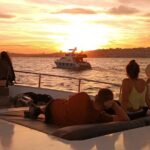
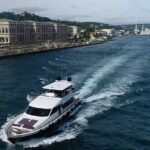
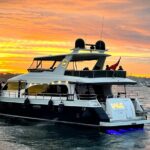
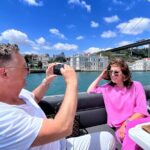
Istanbul splits in two, on the water. This luxury yacht Bosphorus cruise pairs big-picture views of the strait with stops at major Ottoman sites along Europe and the Asian shore, including Dolmabahçe, Rumeli Hisarı, and Kanlıca. I especially love the way the route turns the Bosphorus into a moving guidebook, with Sinan’s clear explanations making the architecture feel understandable, not just pretty.
My other favorite part is the onboard comfort: hot drinks like Turkish tea and Turkish coffee with Turkish delight, plus fresh pastries and fruit to keep you going. One thing to consider: you’re out for about 2.5 hours, so some highlights are more “see and photograph” than “slow museum time,” and anything you buy during the Kanlıca stop is extra.
In This Review
- Key highlights you’ll care about
- Pricing and what makes this feel worth $59.57
- Starting at Dolmabahçe Mosque: the right “opening scene”
- Dolmabahçe Mosque: Ottoman refinement along the water
- Dolmabahçe Palace: how power looked in 19th-century Istanbul
- Ortaköy: the neighborhood break with real local flavor
- Bosphorus Bridge and the idea of a city that connects
- Rumeli Hisarı: the fortress built for control
- Fatih Sultan Mehmet Bridge: modern Istanbul at a narrow point
- Kanlıca on the Asian side: yogurt, Bosphorus breeze, and a short stop
- Anadolu Hisarı: the older fortress across the water
- Küçüksu Pavilion: a neo-baroque waterfront showpiece
- Beylerbeyi Palace: summer retreat and a royal guesthouse
- Maiden’s Tower and the Marmara meeting point
- Galata Bridge and Galataport: where the cruise connects to modern Istanbul
- Onboard comfort: tea, snacks, and a crew that reads the room
- Who this Bosphorus cruise is best for
- Quick practical tips before you go
- Should you book this yacht cruise?
- FAQ
- What is the duration of the Bosphorus Yacht Cruise?
- Where does the tour start?
- What time does the cruise run?
- Is the tour offered in English?
- What’s included in the price?
- Is alcohol included?
- Do I have to pay for the Kanlıca stop?
- How big is the group?
- What happens if the weather is poor?
- Is free cancellation available?
Key highlights you’ll care about
- A two-continent cruise that combines Europe icons and Asian-side landmarks in one outing
- Dolmabahçe Mosque and Palace views tied to Ottoman power and style changes
- Two Bosphorus bridges (including the 15 July Martyrs Bridge) seen from the water
- Asian-side Kanlıca stop built around the famous yogurt, with about 20 minutes on site
- A small group and attentive crew, with blankets and hot drinks if the weather turns
- Photo-friendly stops at fortresses and waterfront viewpoints, not just sightseeing from a distance
Pricing and what makes this feel worth $59.57
At about $59.57 per person for roughly 2.5 hours, the value comes from the combo: a guided yacht cruise plus multiple landmark stops, with food handled for you. You’re not just paying for a boat ride; you’re paying for someone to point out what you’re actually looking at—why Dolmabahçe Mosque looks the way it does, how the bridges changed the city, and why the fortresses were built where they were.
You also get a practical onboard setup: light snacks, seasonal fruit, freshly baked pastries, and Turkish coffee with Turkish delight. That matters because Bosphorus weather can be a little unpredictable, and you don’t want your afternoon to feel like a cold wait between photos.
Just remember: alcohol is not included, and anything you choose during the Kanlıca yogurt stop is personal spending.
Starting at Dolmabahçe Mosque: the right “opening scene”
The tour meets at Dolmabahçe Mosque near Ömer Avni, Meclis-i Mebusan Cd. It’s a strong starting point because it puts you right where the Bosphorus story gets dramatic. From there, the cruise quickly shifts from city streets to water views, so you’re not spending your morning figuring out transportation or guessing where the best skyline angles are.
What I like about starting here is the immediate context. Dolmabahçe Mosque is one of the best places in Istanbul to understand how Ottoman design absorbed outside influences in the 1800s—without losing its Islamic identity.
Dolmabahçe Mosque: Ottoman refinement along the water
Dolmabahçe Mosque was commissioned by Queen Mother Bezmialem Sultan and completed by her son, Sultan Abdülmecid, in 1855. The design mixes traditional Islamic features with baroque and neoclassical influences, which is why it looks so graceful rather than heavy or purely traditional.
On the cruise, the mosque fits into your day like a visual “chapter title.” You get the sense of how the Ottoman court wanted to present itself during the late empire—still proud of Islamic architecture, but also tuned to European artistic trends. If you like domes, arched openings, and bright interiors, this one will make sense fast.
Dolmabahçe Palace: how power looked in 19th-century Istanbul
Next is Dolmabahçe Palace, built between 1843 and 1856 under Sultan Abdülmecid I. It replaced Topkapı Palace as the empire’s administrative center, and that’s a huge clue about the shift in Ottoman life and governance.
The palace is known for its scale and details: 285 rooms, 46 halls, and the famous Crystal Staircase. Even the styles tell a story—baroque, rococo, and neoclassical details layered together to express wealth at the empire’s closing stretch.
From the Bosphorus, you’re seeing the palace the way most people never do: as part of the shoreline theater. It’s not just a building; it’s a waterfront statement.
Ortaköy: the neighborhood break with real local flavor
Ortaköy is one of those places where the Bosphorus doesn’t feel like a postcard. It sits under the Bosphorus Bridge and has a long identity as a small fishing village, now turned into a lively waterfront area.
Ortaköy Mosque is baroque-styled and one of the most photographed landmarks here. And if you enjoy day-to-day culture over only monuments, this stop works because the area is full of cafés, art galleries, and street-level snack culture.
You’ll also understand why “Istanbul by water” hits differently. From the boat, you see how daily life wraps around the strait.
Bosphorus Bridge and the idea of a city that connects
The Bosphorus Bridge (officially the 15 July Martyrs Bridge) opened in 1973 and is the first bridge connecting Europe and Asia. It spans about 1,560 meters, and its modern identity shows right in the silhouette.
Even though your cruise timing is daytime, the bridge still lands as a symbol: the strait that once separated and controlled movement became something people cross by car. It’s a visual reminder that Istanbul is always changing its logistics, not just its architecture.
Rumeli Hisarı: the fortress built for control
Rumeli Hisarı (Rumeli Fortress) is a medieval stronghold on the European shore. It was built in just four months in 1452 by Sultan Mehmed II, right before the conquest of Constantinople. The location wasn’t random. It was designed to control naval traffic through the strait and to limit aid to the Byzantine capital.
What you’ll appreciate here is the defensive logic. Massive stone towers and thick walls make the purpose obvious, and the fortress turns your cruise into something more than sightseeing—it becomes a story about geography and strategy.
If you like fortifications, this is one of the most satisfying stops on the route, because it connects a single viewpoint to centuries of military planning.
Fatih Sultan Mehmet Bridge: modern Istanbul at a narrow point
The Fatih Sultan Mehmet Bridge (the Second Bosphorus Bridge) connects Europe and Asia at one of the narrowest stretches, between Rumeli Hisarı and Anadolu Hisarı. It was completed in 1988 and spans about 1,510 meters.
It’s not just engineering. The naming matters—it honors Sultan Mehmed the Conqueror—and it sits in the same corridor of history as the fortresses you just saw. From the water, you get both stories at once: medieval control and modern movement.
Kanlıca on the Asian side: yogurt, Bosphorus breeze, and a short stop
Now the highlight that makes this cruise feel different from the standard Bosphorus loops: the Asian-side stop at Kanlıca.
Kanlıca is famous for traditional yogurt—creamy, slightly tangy, and often served with powdered sugar in wooden cups. Ottoman nobles once treated it as a retreat, but today it’s more relaxed: waterfront cafés, historic mansions, and leafy streets.
You’ll have about 20 minutes here, and there’s an important practical note: admission for this stop is free, but yogurt and drinks are not included. So if you want the classic Kanlıca yogurt experience, plan to pay a bit extra for it.
This is also where you can reset. After a run of palaces, mosques, bridges, and fortresses, the yogurt stop gives you a simpler moment: sit, taste, and watch the Bosphorus slide by again.
Anadolu Hisarı: the older fortress across the water
Opposite Rumeli Hisarı sits Anadolu Hisarı (Anatolian Fortress), built in 1395 by Ottoman Sultan Bayezid I. It’s described as the oldest Turkish structure on the Bosphorus, and it was built to control naval passage and prepare for the conquest of Constantinople decades later.
If you’re the type who likes “why things are facing each other,” this stop will click. The paired forts explain how control of the strait worked—Europe side and Asia side, side by side, designed to manage movement through a narrow corridor.
Küçüksu Pavilion: a neo-baroque waterfront showpiece
Küçüksu Pavilion (Küçüksu Kasrı) is an imperial hunting lodge on the Asian shore, between Anadolu Hisarı and the Fatih Sultan Mehmet Bridge. It was completed in 1857, commissioned by Sultan Abdülmecid I, and designed by Nigoğayos Balyan.
Its style is described as ornate neo-baroque, and the visual details are the point: marble façade, grand staircases, and richly decorated interiors with crystal chandeliers and gilded ceilings. Set among gardens with Bosphorus views, it feels romantic in the way only court architecture can.
Even if you’re not a design-nerd, you’ll still enjoy how the pavilion adds softness to the cruise. The fortresses show power. Küçüksu shows taste.
Beylerbeyi Palace: summer retreat and a royal guesthouse
Further along the Asian shore is Beylerbeyi Palace, built between 1861 and 1865 under Sultan Abdülaziz. It served as a summer palace for Ottoman sultans and also as a guesthouse for visiting royalty and dignitaries.
Architecturally, it blends baroque, rococo, and neoclassical touches. Inside, it’s described as full of crystal chandeliers, silk carpets, and hand-painted ceilings, with terraced gardens and fountains overlooking the Bosphorus.
From the water, Beylerbeyi Palace adds a different mood than the earlier sites. It’s less about defense and more about how the elite lived—and how the Bosphorus was part of everyday court comfort.
Maiden’s Tower and the Marmara meeting point
Maiden’s Tower (Kız Kulesi) sits on a small islet where the Bosphorus meets the Sea of Marmara. It has origins going back over 2,000 years, and it’s been used in different roles over time: lighthouse and watchtower, and even as a customs station.
The famous legend is part of why the tower sticks in your head. A prophecy story says a sultan built the tower to protect his daughter from danger, giving the place a romantic mystique.
In practice, this stop gives you a strong skyline moment. You’re also shifting your perspective from the long strait to the city’s broader water connections.
Galata Bridge and Galataport: where the cruise connects to modern Istanbul
After the strait-focused part of the day, the route connects back to the city’s waterfront life.
The Galata Bridge crosses the Golden Horn, linking Istanbul’s historic peninsula with Karaköy. The current bridge structure was completed in 1994, built on a line of earlier bridges dating back to the 19th century. From above, people stroll and fish, and below you’ll find cafés and seafood spots.
Then there’s Galataport Istanbul, a more modern waterfront scene opened in 2021. It’s a cruise terminal and lifestyle destination, with an underground terminal designed to protect the area’s scenic feel. You can also find museum options like Istanbul Modern and the Tophane Clock Tower nearby.
This finish matters because it shows you Istanbul as it is now: not only a museum city, but a working port city with everyday energy.
Onboard comfort: tea, snacks, and a crew that reads the room
If the day starts cool or rainy, the best part is that you won’t be left out in the weather. One of the standout details from the experience is that you get blankets and plenty of hot drinks like Turkish tea when conditions aren’t ideal.
Food is handled in a simple, practical way: freshly baked pastries, seasonal fruit, light snacks throughout, plus Turkish coffee served with Turkish delight. It’s not a full meal, but it’s enough to make the cruise feel like a planned afternoon—not a rushed photo chase.
Also, the yacht experience feels calmer than the typical large-tour approach. The group limit is up to 35 people, and the vibe is more relaxed, which makes the guide’s explanations easier to follow.
Who this Bosphorus cruise is best for
This tour fits you if you want:
- A guided way to see major landmarks without navigating the city all on your own
- A route that mixes Europe and Asia in one sitting, with the Kanlıca yogurt stop as a bonus
- A comfortable morning or midday activity with food and hot drinks handled
It might be less ideal if you want long museum hours at each site. This is a cruise with stops, not a slow, in-depth day inside palaces and mosques.
Quick practical tips before you go
Bring a jacket even in pleasant months. Bosphorus wind can surprise you, and having layers makes the boat time much easier. If you’re set on tasting Kanlıca yogurt, bring small cash or a card for the extra purchase since it’s not included.
Finally, keep your camera ready for the bridge viewpoints and the fortress angles. The route is built around being able to see details clearly from the water.
Should you book this yacht cruise?
I’d book it if you want an efficient, scenic way to understand Istanbul’s Bosphorus—Europe side history, an Asian-side taste of everyday life, plus the comfort of hot drinks and snacks while you’re out on the water. For the price, the mix of guidance, yacht time, and multiple landmark stops makes it feel fair, not cheap in the bad way.
Skip it only if you need deep, time-consuming museum visits and are okay handling transportation yourself. If you want a smart afternoon with the city’s biggest “wow” factor, this one is hard to beat.
FAQ
What is the duration of the Bosphorus Yacht Cruise?
The cruise lasts about 2 hours 30 minutes.
Where does the tour start?
The meeting point is Dolmabahçe Mosque on Ömer Avni, Meclis-i Mebusan Cd. No:34, 34427 Beyoğlu, Istanbul.
What time does the cruise run?
It runs from 10:30 AM to 1:00 PM.
Is the tour offered in English?
Yes, the tour is offered in English.
What’s included in the price?
Included are the yacht cruise, a professional English-speaking guide, pastries, seasonal fresh fruits, light snacks, and Turkish coffee with Turkish delight.
Is alcohol included?
No. Alcoholic drinks are available for purchase upon request.
Do I have to pay for the Kanlıca stop?
Admission at the Kanlıca stop is free, but yogurt and other personal items are not included and you’ll pay your own expenses there.
How big is the group?
The tour has a maximum of 35 travelers.
What happens if the weather is poor?
This activity requires good weather. If it’s canceled due to poor weather, you’ll be offered a different date or a full refund.
Is free cancellation available?
Yes. You can cancel up to 24 hours in advance for a full refund.
You Might Also Enjoy
More Tour Reviews in Istanbul
- Bosphorus Yacht Cruise with Stopover on the Asian Side – (Morning or Afternoon)
★ 5.0 · 1,657 reviews