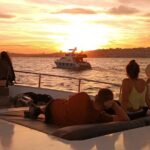
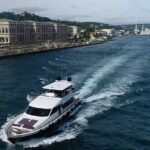
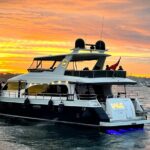
The Bosphorus looks different from a yacht. This luxury afternoon cruise lets you glide between Asia and Europe while your English-speaking guide explains what you’re seeing. I especially liked the licensed guide who ties landmark names to real details, and the calm pace that turns Istanbul’s big sights into something you can actually enjoy.
The main thing to consider: this is time on the water. If you’re prone to seasickness or have vertigo, you’ll likely want a land-based plan instead.
In This Review
- Key highlights before you go
- Why this Bosphorus cruise feels worth your $35.39
- Meeting point and timing: keep it simple
- The Bosphorus, explained in plain terms
- Dolmabahçe Palace: the grand gateway to the strait
- Çırağan Palace: marble, imprisonment, and reinvention
- Ortaköy and the Bosphorus Bridge: one of Istanbul’s photo sweet spots
- Bebek: a quieter Bosphorus stop with big restaurant energy
- Rumeli Hisarı: why this fort was built across from another one
- Fatih Sultan Mehmet Bridge: engineering as a skyline feature
- Anadolu Hisarı: the Asian-side fortress with a restricted feel
- Küçüksu Pavilion: a summer palace and hunting lodge angle
- Beylerbeyi Palace: a palace under the bridge
- Galata Tower and Galata Bridge: Istanbul’s skyline moments from the water
- Maiden’s Tower: legend on a tiny island
- Snacks, tea, and what to do with your two hours
- Who this cruise suits best (and who should skip)
- Should you book this Bosphorus guided afternoon cruise?
Key highlights before you go
- A smooth, 2-hour luxury-yacht reset with time to take photos without rushing through crowds
- English commentary that connects palaces, bridges, and forts to the story of the strait
- Classic Bosphorus viewpoints like Dolmabahçe, Ortaköy, Bebek, Rumeli Hisarı, and Beylerbeyi
- Big Istanbul skyline moments from the water, including views toward Galata Tower and the area around Galata Bridge
- Comfort snacks included: baklava, cookies, Turkish tea, lemonade, fruit plates, and water
Why this Bosphorus cruise feels worth your $35.39
At $35.39 per person for about two hours, this isn’t priced like a fancy, long-day tour. It’s more like you’re paying for three things at once: a good boat experience, a guided route with context, and included refreshments. In Istanbul, that combo matters. It saves you from piecing together transport, timing, and a private guide just to understand what you’re seeing from the water.
I like that it’s built for ease. The start is in Beyoğlu, and the activity ends back at the meeting point. That kind of loop is underrated in Istanbul, where one wrong turn can steal half your day.
And because the group is capped at 30 travelers, you’re not stuck in a huge herd. You still get the “how did they build that?” explanations, without feeling drowned out.
Meeting point and timing: keep it simple
You’ll start at Türkiye Petrolleri Ömer Avni, Meclis-i Mebusan Cd. No:34, 34427 Beyoğlu/İstanbul, Türkiye, with a 1:00 pm departure. The listing also notes it’s near public transportation, which helps if you’re staying in Taksim, Galata, or nearby neighborhoods.
With a start time in early afternoon, you dodge both the early-morning scramble and the late-day rush. It also gives you a nice chance to catch daylight on palaces and bridges—exactly what you want on a Bosphorus cruise.
One practical tip: if you’re worried about motion, this kind of water time is the first thing to consider. The tour also says it’s not recommended for vertigo and not recommended for people prone to seasickness, so don’t tough it out just because the views sound perfect.
The Bosphorus, explained in plain terms
The guide’s Bosphorus talk is the glue that holds the experience together. The Bosphorus (also called the Bosporus with its historical name) is the strait that separates Istanbul’s European side and Anatolian side and connects the Sea of Marmara with the Black Sea.
You learn a few practical “this matters” facts. It generally runs in a northeast-southwest direction. The strait is about 30 kilometers long. Water depth averages around 60 meters, with the deepest point reaching about 120 meters. And it’s not just pretty water—there are currents too: on the surface, currents tend to move from the Black Sea toward the Marmara, and below the surface they move back.
Why does that matter to you? Because once you understand that it’s an active waterway, the bridges, fortresses, and palace locations make sense. People didn’t build there because it was convenient. They built there because controlling this strait controlled movement between seas—and because the views were unforgettable.
Dolmabahçe Palace: the grand gateway to the strait
Dolmabahçe Palace sits on a large waterfront area in Beşiktaş, between Kabataş and Beşiktaş. The spot matters: it’s on the left bank at the entrance to the Bosphorus from the Sea of Marmara, opposite Üsküdar and Kızıcunguncuk.
What I like about learning Dolmabahçe from the water is that it changes the scale. From a street, a palace can feel like a “thing you visit.” From the Bosphorus, it feels like a statement—an imperial address literally turned toward the strait.
The palace area is described as about 250,000 square meters, and the background story helps: it developed from an older cove where ships anchored in ancient times, then became a favorite residence of the sultanate. That’s a key vibe of Istanbul’s waterfront: older marine life, then centuries of power and display layered on top.
Çırağan Palace: marble, imprisonment, and reinvention
Çırağan Palace is commissioned by Sultan Abdulaziz and designed by architect Sarkis Balyan. It’s on the site of a former wooden summer palace built by Selim III in 1800. During construction, the wooden structure and nearby Mevlevihane were destroyed.
The palace itself is described as marble, spread over about 80,000 square meters, with construction completed in 1871. What I found striking in the guide’s framing is how the palace served both luxury and punishment. After Abdulaziz was deposed, he was imprisoned here with his family. After Murat V was deposed, he faced a similar imprisonment for 29 years.
Then the story shifts again: after the 1908 Second Constitutional Monarchy, the palace was used as the House of Parliament, but it was damaged by fire in 1910. Later, the palace grounds became part of Besiktas Sports Club and were used as Seref Stadium for a period. In the early 1990s, it was restored and reopened as a luxury hotel.
From the water, you don’t need to know every political detail to get it. You just need to understand the theme: this shoreline keeps changing roles, but it keeps its visual power.
Ortaköy and the Bosphorus Bridge: one of Istanbul’s photo sweet spots
Ortaköy is a Beşiktaş neighborhood on the European side, built on slopes opening to the coast. The Ortaköy Bazaar is lively throughout the day with souvenir shops, cafes, bars, and an “intellectual market” feel. The note about timing is useful: it’s a bit uninspiring early, with more movement starting after 10:00 am. Your cruise timing starts at 1:00 pm, which lines up well if you want the area to feel active in your photos.
Then comes the Bosphorus Bridge, one of two suspension bridges on the strait. Its feet are in Ortaköy on the European side and Beylerbeyi on the Anatolian side. The guide explains that building a bridge here was a long idea with many attempts; construction began in 1970, and it opened on October 29, 1973—the 50th anniversary of the Republic.
Why it’s worth hearing about: the bridge isn’t just a way across. It’s also a symbol, and from a boat you see how it frames the city’s two continents in the same view.
Bebek: a quieter Bosphorus stop with big restaurant energy
Bebek (which translates as baby) sits on the European shores of the Bosphorus. It’s a historic neighborhood that has been popular since Ottoman times. The guide also connects Bebek to its surroundings—Arnavutkoy, Etiler, and Rumeli Hisarı—so you can understand why it feels like a calm pocket between heavier landmarks.
If you like waterfront atmosphere, Bebek delivers. The idea isn’t “one monument.” It’s a coastline of mansions and viewpoints, with historic buildings nearby such as Bogaziçi University and waterside residences. In other words, it’s a good stop for the kind of photos that look like you planned a whole day—without needing one.
Rumeli Hisarı: why this fort was built across from another one
Rumeli Fortress (Rumeli Hisarı) is in Sariyer on the European side. The key fact: it was constructed directly across from Anadolu Hisarı, and the construction started in 1453 at Sultan Mehmed the Conqueror’s order. The fortress was placed at the narrowest point of the Bosphorus. The build was fast—completed in about three months.
Before Istanbul’s conquest, it served to protect against naval attacks. After the conquest, it became an inspection point for maritime traffic along the Bosphorus.
There’s also a change over time story in the guide’s explanation: the area inside filled with small wooden houses, but during restoration work in 1953, those houses were removed. After restoration, it gained a reputation for summer concerts and now serves as an open-air theater and museum.
From the boat, this stop is about perspective. The strait’s narrowness becomes visible, and you understand how two fortress locations create a defensive line—one continent watching the other.
Fatih Sultan Mehmet Bridge: engineering as a skyline feature
Next up is the Fatih Sultan Mehmet Bridge (Fatih Sultan Mehmet Köprüsü), the second Bosphorus bridge. It spans between Kavacık and Hisarüstü. Construction began in 1986, and it opened on July 3, 1988.
What makes it fun to learn from the water is the quick engineering hit: it’s described as the 14th largest steel suspension bridge in the world. The guide also notes the bridge carries a significant portion of Istanbul’s trans-Bosphorus traffic, and it becomes an unforgettable part of the skyline.
If you’re into city views, this is a “watch the lines” moment—how the steel structure slices across the water while palaces, forts, and waterfront neighborhoods slide by behind it.
Anadolu Hisarı: the Asian-side fortress with a restricted feel
On the Anatolian side, Anadolu Hisarı is located in Beykoz at the narrowest point of the Bosphorus. It was built in 1395 by Bayezid I and made up of a citadel plus exterior castle walls.
After the conquest, it lost much of its strategic importance and became a military hospital. Over time, settlement formed around it. The area was then converted into a museum during restoration work from 1991–1993, but the note here is important: it is not open to the public in the way you might expect. You can visit the outer walls, and a road passes just through it.
This is one of those stops where the cruise format makes sense. You get context and you can still appreciate the scale without trying to fit a full museum visit into a 2-hour window.
Küçüksu Pavilion: a summer palace and hunting lodge angle
The cruise also includes the Küçüksu Pavilion museum viewpoint and what the guide calls “history” around it. You learn that Ottoman emperors used Küçüksu Pavilion as a summer palace and also as a hunting lodge.
This kind of stop is valuable because it softens the story from war and control into daily power—how the elite lived on the water’s edge. And if you’re traveling with people who find palace architecture “dry,” this framed use case helps: it wasn’t built only to impress; it was built for seasonal life.
Beylerbeyi Palace: a palace under the bridge
Beylerbeyi Palace is another Ottoman summer palace complex, built in the 1860s on the shore of the Bosphorus. Today it sits right under the Bosphorus bridge. The guide points out the design by architect Sarkis Balyan and the mix of architectural elements—Renaissance, Baroque, and other influences from both East and West.
The palace main building is described as a two-store stone construction on a high basement, on land of about 2,500 square meters. The guide also gives you the internal layout in simple terms: Imperial Mabeyn on one side (south), and Valide Sultan’s apartment on the other (north). You’re told there are 6 halls and 24 rooms, plus a hamam and a bathroom.
One part I’d be glad for if you’re the type who likes gardens: don’t miss the lily pond and large garden. The palace is described with gardens as a key feature, and on a cruise you can usually appreciate the setting even if you don’t have time to explore everything slowly.
Galata Tower and Galata Bridge: Istanbul’s skyline moments from the water
Even if you’re focused on the Bosphorus, the guide brings in other icons. Galata Tower is described as a Genoese-built tower from 1348, with nine stories and a height of 66.90 meters—the tallest building in the city when it was built.
It also had practical uses over time: a fire observatory and later a jail. The story of Hezarfen Ahmet Çelebi gliding across the Bosphorus to Üsküdar in 1632 is highlighted by the guide—one of those facts that turns a viewpoint into a living legend.
A storm in 1875 destroyed the conic roof, later restored in the 1960s, with the wooden interior replaced by concrete. Today it’s open to the public and the upper floor has a restaurant and café, making it easy to connect the skyline with a place you could return to later.
Galata Bridge (Galata Köprüsü) is then explained as a long-running city link. Its history begins in 1845, and the guide notes how it changed over time. The bridge was damaged by fire in 1992, and a new bridge replaced it; the old bridge was moved to Halic. Below, there are restaurants, cafes, and hookah lounges, while a tramway and pedestrian traffic run above—plus people fishing from the bridge. It’s presented as a classic spot for pictures of daily life, especially in the evening.
On your cruise, the value isn’t that you’re doing everything. It’s that you’re seeing where these neighborhoods and icons sit in relation to the Bosphorus and the bridges, so your later planning becomes easier.
Maiden’s Tower: legend on a tiny island
The Maiden’s Tower (Kız Kulesi) is described as a distinctive feature of the Bosphorus skyline, built on a tiny island about 200 meters from the shore of Üsküdar. The guide tells the most popular legend: an oracle predicts that a sultan’s daughter will die from snake bite on her 18th birthday.
To prevent it, the tower is built so the daughter can live in secrecy and protection. On her 18th birthday, the sultan brings her fruit in a basket—unaware a snake is hidden inside. She’s bitten and dies in her father’s arms, exactly as foretold.
Even if you don’t care about legends, this is one of those viewpoints that hits emotionally. A single, isolated structure on the water makes the Bosphorus feel more cinematic than just impressive.
Snacks, tea, and what to do with your two hours
Included refreshments make the time feel more like a relaxing break than a hard sightseeing session. You get cookies, baklava, Turkish tea, lemonade, fruit plates, and water. Alcoholic drinks are not included (and there’s a stated minimum drinking age of 18).
My favorite way to use the snack break is simple: grab tea early, then settle into a window-view rhythm. This is your chance to watch how neighborhoods change from shore to shore—palaces, bazaars, mansions, and fortresses all in one moving panorama.
Also, keep in mind that on some days—like Mondays, when certain museums are closed—the team can adjust with an alternative stop. So if you’re visiting on a Monday, don’t assume everything will behave like a textbook plan. The cruise is designed to keep the experience flowing.
Who this cruise suits best (and who should skip)
This tour is a great fit if you want a guided Bosphorus experience without committing a full day. It’s especially good for:
- Couples who want a relaxed outing with major Istanbul views
- First-timers who need context fast: why the palaces, forts, and bridges exist
- Anyone who likes taking photos but hates walking for hours on uneven streets
- Groups that value small-size touring (max 30 travelers) and included snacks
Skip it, or plan something else, if:
- You’re sensitive to motion and have a history of seasickness (it’s not recommended)
- You have vertigo and don’t feel comfortable on boats (also not recommended)
Should you book this Bosphorus guided afternoon cruise?
If you’re trying to decide between a quick boat ride and a guided one, I’d choose this. The price is fair for a luxury yacht experience with included refreshments, and the guide’s explanations connect the landmarks into one clear story of the strait.
Book it if your priority is easy Bosphorus viewpoints—palaces, bridges, forts, and iconic towers—without the stress of museum lines and long transit. I’d also book ahead if you can, since it’s commonly reserved about 25 days in advance.
If you need a fully accessible, land-only plan or you know you don’t do well on water, then choose something else. But if you’re comfortable on a boat and want Istanbul at a slower pace, this is a strong pick.
You Might Also Enjoy

More Tour Reviews in Istanbul
- Bosphorus Yacht Cruise with Stopover on the Asian Side – (Morning or Afternoon)
★ 5.0 · 1,657 reviews