REVIEW · ISTANBUL
Afternoon Bosphorus Cruise Luxury Yacht with Professional Guide
Book on Viator →Operated by Yacht Cruises: Bosphorus · Bookable on Viator
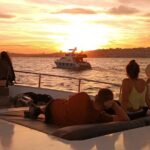
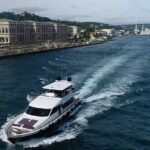
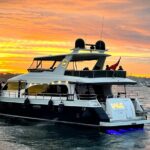
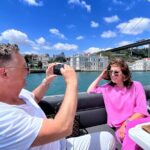
The Bosphorus looks different from a yacht. You get the Asia-Europe divide, palace waterfronts, and skyline legends in one smooth, guided water ride with professional context instead of random sightseeing.
Two things I really like: the snacks and drinks are properly generous for the price, and the guide adds clarity as you pass major landmarks. One thing to think about: this is not for you if you get motion sick, since it’s a real boat cruise and they also note it’s not recommended for vertigo.
I’m especially taken with how the experience centers on seeing Istanbul’s water story in order—Bosphorus geography first, then palaces, fortresses, and towers. In reviews, the English-language guiding stood out, including Celil, and that kind of calm, detailed guidance makes the stops easier to recognize on the spot.
If you want a long, wander-around tour, note this is timed as a cruise with viewpoints more than full on-the-ground museum time.
Practical tip: plan on good weather for best comfort and the best sights. If the weather doesn’t cooperate, you’ll be offered a different date or a full refund, so keep an eye on forecast timing for your day.
In This Review
- Key highlights you will actually use
- Luxury yacht, English guide, and how 2 hours plays out
- Where you meet and what that means for your day
- Bosphorus basics: currents, the Europe-Asia split, and why this matters
- From Dolmabahçe Palace waterfront to the palace that became a hotel
- Dolmabahçe Palace: power by the water
- Çırağan Palace: marble, imprisonment, and a comeback
- Ortaköy, the Bosphorus Bridge feet, and city life at water level
- Rumeli Hisarı and Anadolu Hisarı: fortresses positioned like a chess match
- Rumeli Hisarı (Rumeli Fortress)
- Anadolu Hisarı (Anadolu Fortress)
- Küçüksu Pavilion and Beylerbeyi Palace: the Bosphorus as a summer retreat
- Küçüksu Pavilion museum
- Beylerbeyi Palace and its lily pond/garden look
- Maiden’s Tower plus Galata Bridge and Galata Tower views
- Maiden’s Tower (Kız Kulesi) legends and the small-island look
- Galata Bridge: daily Istanbul energy from below and above
- Galata Tower: height, changing roles, and a panoramic payoff
- Drinks, fruit, cookies, and why the value feels real
- Who this Bosphorus cruise is best for
- Should you book this Bosphorus afternoon luxury yacht cruise?
- FAQ
- How long is the Bosphorus luxury yacht cruise?
- What time does the cruise start?
- Is the cruise in English?
- What’s included in the price?
- Are alcoholic beverages included?
- Where do I meet and where does it end?
- How large is the group?
- Is this cruise recommended if I get seasick?
- What if the weather is bad?
Key highlights you will actually use
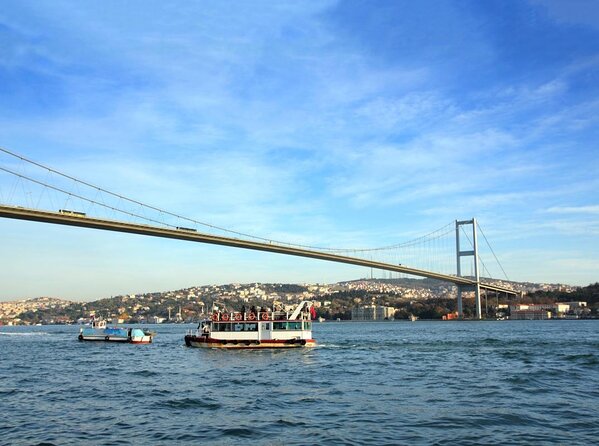
- Professional guide explanations that help you identify what you’re seeing from the water
- Mint lemonade plus tea/coffee and water, along with a fruit plate and cookies and baklava onboard
- An Istanbul route that mixes palaces, fortresses, and iconic towers without changing hotels or dealing with tight city traffic
- Bosphorus geography in context: the strait’s currents and its role as a gateway between Sea of Marmara and Black Sea
- Views framed by major crossings like the Bosphorus Bridge and the Galata Bridge area
Luxury yacht, English guide, and how 2 hours plays out
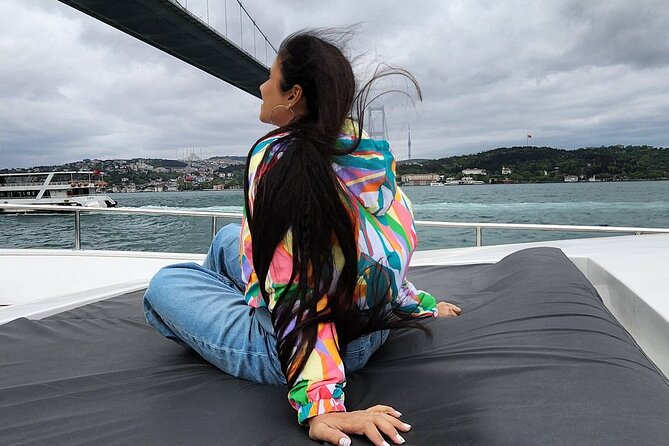
This is a compact cruise, about 2 hours, which is exactly what makes it workable on a packed Istanbul itinerary. You’re paying for time on the Bosphorus where the skyline is the main event, and you don’t need to line up, transfer, or pace through multiple neighborhoods.
The format is also smart: a maximum of 30 travelers keeps the group from feeling like a cattle-car photo stop. And because there’s a professional guide speaking English, you get more than pretty views—you get a thread that ties the landmarks together so you can look up and know what you’re seeing.
Where it matters most for planning: the timing is start at 1:00 pm, so you’re usually catching daytime light across the strait and palaces. If you’re aiming for the classic golden-hour glow, you may find you want a second stop after the cruise, but the midday timing still works well for photos and for reading the waterfront details.
Where you meet and what that means for your day
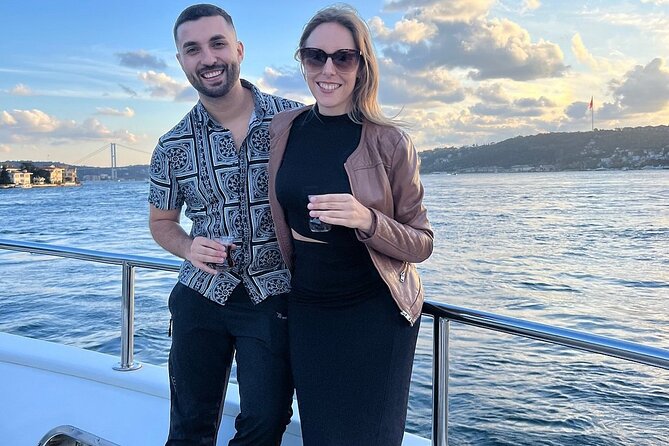
You meet at Türkiye Petrolleri Ömer Avni, Meclis-i Mebusan Cd. No:34, 34427 Beyoğlu, Istanbul and you return to that same meeting point. That round-trip setup is underrated in Istanbul, where getting back to your original base can eat time.
It’s also described as being near public transportation, which matters if you’re coming from areas like Karaköy, Galata, or Taksim. A mobile ticket is used, so you’re not trying to hunt down paperwork right before boarding.
One more practical detail: there’s a restroom on board, which helps a lot when you’re committing to a timed water ride. For most people, that alone makes the experience feel less stressful than a day that depends on bathroom breaks in crowded streets.
Bosphorus basics: currents, the Europe-Asia split, and why this matters
Before you even reach the palaces and towers, the cruise makes the Bosphorus feel like more than a scenic channel. You’re looking at the strait that separates Europe and Asia and connects the Sea of Marmara and the Black Sea.
The scale helps your brain lock onto it: it runs roughly 30 kilometers, with an average depth around 60 meters and a deepest point reported up to 120 meters. The width varies a lot depending on where you are along the shore, with the widest point given as about 3,500 meters.
Then comes the part that helps you understand why the water can look so different: currents. The cruise route references that surface currents flow from the Black Sea to the Marmara, while underwater currents run the other way, plus occasional counter currents. You don’t need to be a scientist to appreciate it—you just start seeing the Bosphorus as a living system, not just a backdrop.
And yes, you’ll also see the modern Istanbul symbols built over this same narrow passage, including the Bosphorus Bridge, which connects the European Side and the Anatolian side.
From Dolmabahçe Palace waterfront to the palace that became a hotel
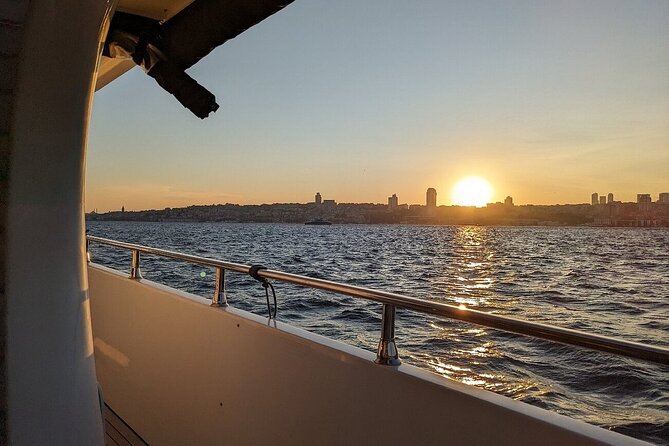
Two palace stops anchor this cruise visually, and they’re far more interesting when you understand their personalities.
Dolmabahçe Palace: power by the water
Dolmabahçe Palace sits on a large 250,000 square meter area in Beşiktaş, right by the Bosphorus. It’s on the left bank at the entrance to the Bosphorus from the Sea of Marmara, opposite Üsküdar and Kuzguncuk.
What I like about seeing it from the water is that you understand the logic: it’s not tucked inland. It’s designed for presence. The description also notes that Dolmabahçe began as a cove where ships anchored in ancient times, and later became a favorite residence of the sultanate. From the yacht, you can connect the dots between the harbor function and the ceremonial waterfront.
One consideration: from a boat, you’re mostly viewing the palace from the outside, not touring rooms. So if your priority is interior palace rooms, you’ll likely want separate timed visits afterward.
Çırağan Palace: marble, imprisonment, and a comeback
Çırağan Palace was commissioned by Sultan Abdulaziz and designed by architect Sarkis Balyan. Construction finished in 1871, and the palace is described as marble with a total area of 80,000 square meters.
The storyline is darker than Dolmabahçe. After Abdulaziz was deposed, he was imprisoned here for years with his family. The palace later served a similar purpose for Murat V, imprisoned with family for 29 years.
Then it pivots again in the 20th century: after the Second Constitutional Monarchy in 1908, it was used as the House of Parliament, but it was damaged by a fire in 1910. Eventually the grounds became part of what’s described as the Besiktas Sports Club area, even used as Seref Stadium for a period. The modern twist: restoration in the early 1990s and reopening as a luxury hotel.
From the yacht, this is a place where the view does double duty: you get the elegance, but you also get the sense of how tightly politics and architecture were tied along the Bosphorus.
Ortaköy, the Bosphorus Bridge feet, and city life at water level
Ortaköy is on the European side, in Beşiktaş, with the neighborhood described as established on slopes along a valley opening to the coast. That hillside shape is why it looks so distinctive from the water—buildings rise up in layers instead of sitting flat along a single line.
The cruise route also frames the neighborhood through the lens of the Ortaköy Bazaar, which is lively at most hours and includes souvenir shops, cafes, bars, and restaurants. The note that the movement starts after 10:00 am is useful: since this cruise starts at 1:00 pm, you’re right in the middle of the active daytime rhythm if you plan any quick follow-up walks.
Then there’s the Bosphorus Bridge, a modern icon with very specific geography. The bridge feet are in Ortaköy (European side) and Beylerbeyi (Anatolian side). It’s described as the first bridge built on the Bosphorus, opened on 29 October 1973 after construction began in 1970. It’s also part of how the city moves continuously, all day long.
For you as a visitor, this creates a nice contrast: you see old palace waterfronts and fortresses tied to controlling the strait, and then you see a transportation link built directly over the same passage.
Rumeli Hisarı and Anadolu Hisarı: fortresses positioned like a chess match
This is where the cruise starts feeling like a history lesson without the lecture tone.
Rumeli Hisarı (Rumeli Fortress)
Rumeli Fortress is in Sarıyer on the European side, built directly across from Anadolu Hisarı. Construction began in 1453 at the order of Sultan Mehmet the Conqueror, placed at the narrowest point of the Bosphorus. The fortress was completed in an extremely short three months.
The purpose matters. Before the conquest of Istanbul, it’s described as protection against naval attacks. After the conquest, it became an inspection point for maritime traffic. That idea of controlling and monitoring ships is key to how you’ll interpret the waterfront as you move along.
A nice present-day note: inside the fortress, small wooden houses existed for centuries, but they were removed during restoration work in 1953. After restoration, Rumeli Hisarı became known for summer concerts, and today it serves as an open-air theater and museum.
Anadolu Hisarı (Anadolu Fortress)
On the Asian side, Anadolu Hisarı is in Beykoz at the narrowest point of the Bosphorus. It was built in 1395 by Beyazid I, and it includes a citadel plus exterior castle walls.
After the conquest of Istanbul, it lost much strategic importance and was converted into a military hospital, and later the area around it became settled. The restoration work described as running 1991–1993 converted it into a museum, but it’s noted as not open to the public; today, only outer walls can be visited and the road passes through it.
The practical takeaway: you’ll get the sightline value from the cruise, but if you want to access the grounds in detail, you’ll need to plan separately for whatever parts are accessible.
Küçüksu Pavilion and Beylerbeyi Palace: the Bosphorus as a summer retreat
Two more Ottoman-era stops shift the mood from fortifications to leisure.
Küçüksu Pavilion museum
Küçüksu Pavilion is described as a museum connected to Ottoman emperors using it as both a summer palace and a hunting lodge. That dual function helps you interpret the architecture and location as something built for time outside the main palace cycle—closer to nature, closer to the water, and suited to outdoor pursuits.
From the water, the most important value is simply context. Once you know it was a summer escape, the coastline reads less like a blank shoreline and more like a place that was selected on purpose.
Beylerbeyi Palace and its lily pond/garden look
Beylerbeyi Palace is an Ottoman summer palace complex built in the 1860s on the shores of the Bosphorus. It sits right under the Bosphorus Bridge and is described as combining elements of Renaissance, Baroque, and other styles from both East and West.
The architect named is Sarkis Balyan again, which is a fun connection as the cruise moves through landmarks tied to his work.
Details that help you picture the building: the main building is described as a two-store stone construction on a high basement, set on land of about 2,500 square meters. There are 6 halls, 24 rooms, plus 1 hamam and 1 bathroom, with the South side described as the Imperial Mabeyn and the North side the Valide Sultan’s apartment.
And don’t miss the grounds: the description specifically calls out a lily pond and a large garden. Those are exactly the kind of features that make a palace feel lived-in and seasonal, not just ceremonial. From the yacht, you’ll likely see the palace and shoreline greenery as a unified composition rather than separate pieces.
Maiden’s Tower plus Galata Bridge and Galata Tower views
This part of the cruise leans into the Istanbul skyline that people dream about before they arrive.
Maiden’s Tower (Kız Kulesi) legends and the small-island look
Maiden’s Tower is a distinctive feature on the Bosphorus skyline, built on a tiny island about 200 meters from the shore of Üsküdar. The cruise includes the well-known legend: an oracle prophesied the sultan’s daughter would be killed by snake bite on her 18th birthday, so the tower was built so she could be protected in secrecy.
On her birthday, the story says the sultan brought a basket of fruits with the hidden snake inside, leading to the fatal bite and ending in the father’s arms. It’s the kind of legend that makes the tower more than a photo subject—you start looking at the tower and wondering why anyone would think a prophecy could be outsmarted.
Galata Bridge: daily Istanbul energy from below and above
The Galata Bridge section is described as starting in 1845, spanning the two sides of the Golden Horn. It has gone through changes, including a fire in 1992 that damaged the bridge, followed by a new bridge replacement. The earlier, beloved old bridge was moved to Halic.
What I like from a viewer’s perspective is the way the bridge functions at multiple levels: restaurants, cafes, and hookah lounges underneath; tramway and pedestrian traffic on top; plus fishing and ferries nearby. That’s the kind of everyday scene where you get real Istanbul texture rather than just monuments.
The guide context here matters because it explains why the bridge keeps showing up in literature and popular culture.
Galata Tower: height, changing roles, and a panoramic payoff
Then comes Galata Tower. Built by Genoese in 1348, it’s described as a nine-story tower about 66.90 meters, and it was the city’s tallest building when built.
In the Ottoman era, it served multiple functions: a fire observatory and a jail. One striking moment is mentioned: in 1632, Hezarfen Ahmet Çelebi is described as gliding from the top across the Bosphorus to Üsküdar using self-constructed wings.
It also faced destruction: during a storm in 1875, the conic roof was destroyed. The conical cap was restored in the 1960s, and the wooden interior was replaced with concrete. Today it’s open to public, and the upper floor includes a restaurant and cafe. For most people, the practical value is the panoramic views from the tower area.
Drinks, fruit, cookies, and why the value feels real
This is a cruise where the inclusion list actually changes your experience.
You get complimentary drinks, including homemade lemonade with fresh mint, plus water, tea, and coffee. There’s also a fresh season fruits plate and cookies and baklava served aboard.
That matters because you’re out on the water, and it’s easy for cruises to be mostly empty calories or paid upgrades. Here, the core comfort items are included. You can focus on the views and the guide instead of scanning for the cheapest drink.
Alcohol is not included, so if that’s your expectation, plan for it separately. But for a daytime 1:00 pm ride, mint lemonade, coffee, and pastries are exactly the kind of refreshment that fits the pace.
Price-wise, $25.74 per person for roughly 2 hours with an English guide, snacks, drinks, and a restroom onboard is the kind of deal that works if you want a big payoff without paying for a private boat. It’s not trying to be a full-day palace pass; it’s built to be a smart, concentrated Istanbul-water moment.
Who this Bosphorus cruise is best for
This cruise fits especially well if you:
- Want iconic Bosphorus landmarks in a tight time window around 2 hours
- Like guided context, not just drifting past buildings
- Want included refreshments without adding extra stops
- Prefer a small group setting (max 30 travelers)
It’s less ideal if you:
- Have vertigo or seasickness concerns (it’s explicitly noted as not recommended)
- Need museum-style inside access during the cruise itself, since the experience is designed around the waterfront views
Should you book this Bosphorus afternoon luxury yacht cruise?
If your goal is simple—see the Bosphorus, learn what you’re seeing, and enjoy a comfortable onboard break—this is an easy yes. The guide quality shows up in high ratings, and the included food and drinks make the price feel fair rather than nickel-and-dimed.
Book it if you’re doing Istanbul basics and you want the waterline version of the city: palaces, fortresses, and skyline icons tied together by a professional explanation. Skip it if boat motion is a problem for you, or if you’re only interested in interior museum time.
If the weather looks iffy, consider it a sign to keep your schedule flexible; the experience depends on good conditions, and they offer alternatives or a refund if it can’t run.
FAQ
How long is the Bosphorus luxury yacht cruise?
It’s about 2 hours.
What time does the cruise start?
The start time is 1:00 pm.
Is the cruise in English?
Yes, it’s offered in English.
What’s included in the price?
Included are the 2-hour luxury yacht cruise, a restroom on board, complimentary drinks (homemade lemonade with fresh mint, water, tea, and coffee), and a fresh season fruits plate plus cookies and baklava served aboard.
Are alcoholic beverages included?
No. Alcoholic beverages are not included.
Where do I meet and where does it end?
You meet at Türkiye Petrolleri Ömer Avni, Meclis-i Mebusan Cd. No:34, 34427 Beyoğlu, Istanbul, and the activity ends back at the meeting point.
How large is the group?
The maximum group size is 30 travelers.
Is this cruise recommended if I get seasick?
No. It’s not recommended for vertigo and seasickness.
What if the weather is bad?
The experience requires good weather. If it’s canceled due to poor weather, you’ll be offered a different date or a full refund.
You Might Also Enjoy
More Tour Reviews in Istanbul
- Bosphorus Yacht Cruise with Stopover on the Asian Side – (Morning or Afternoon)
★ 5.0 · 1,657 reviews